
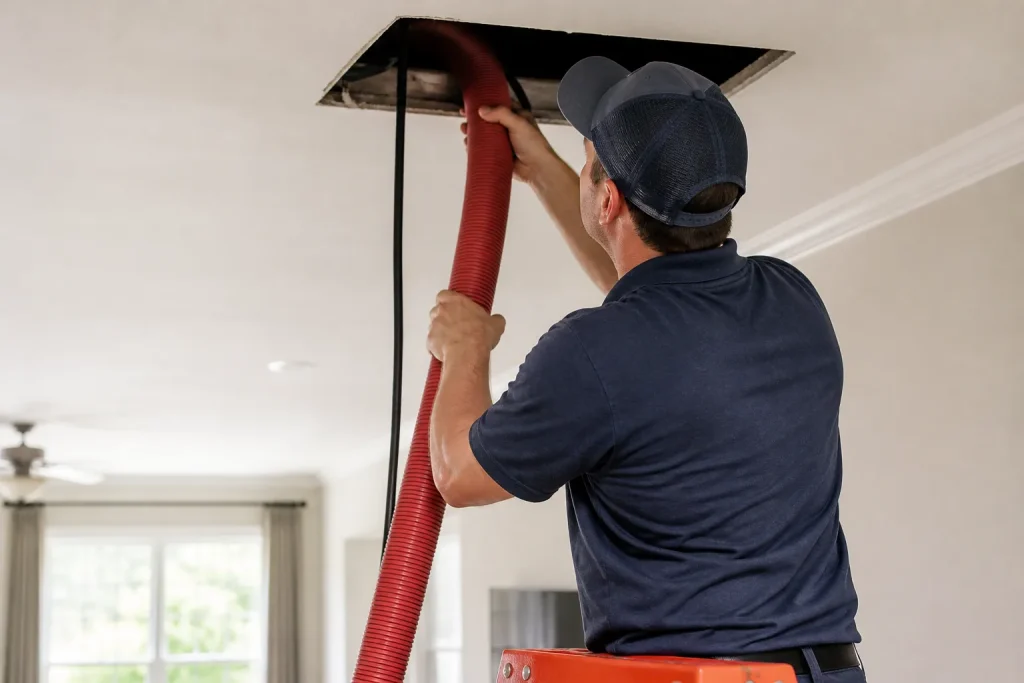
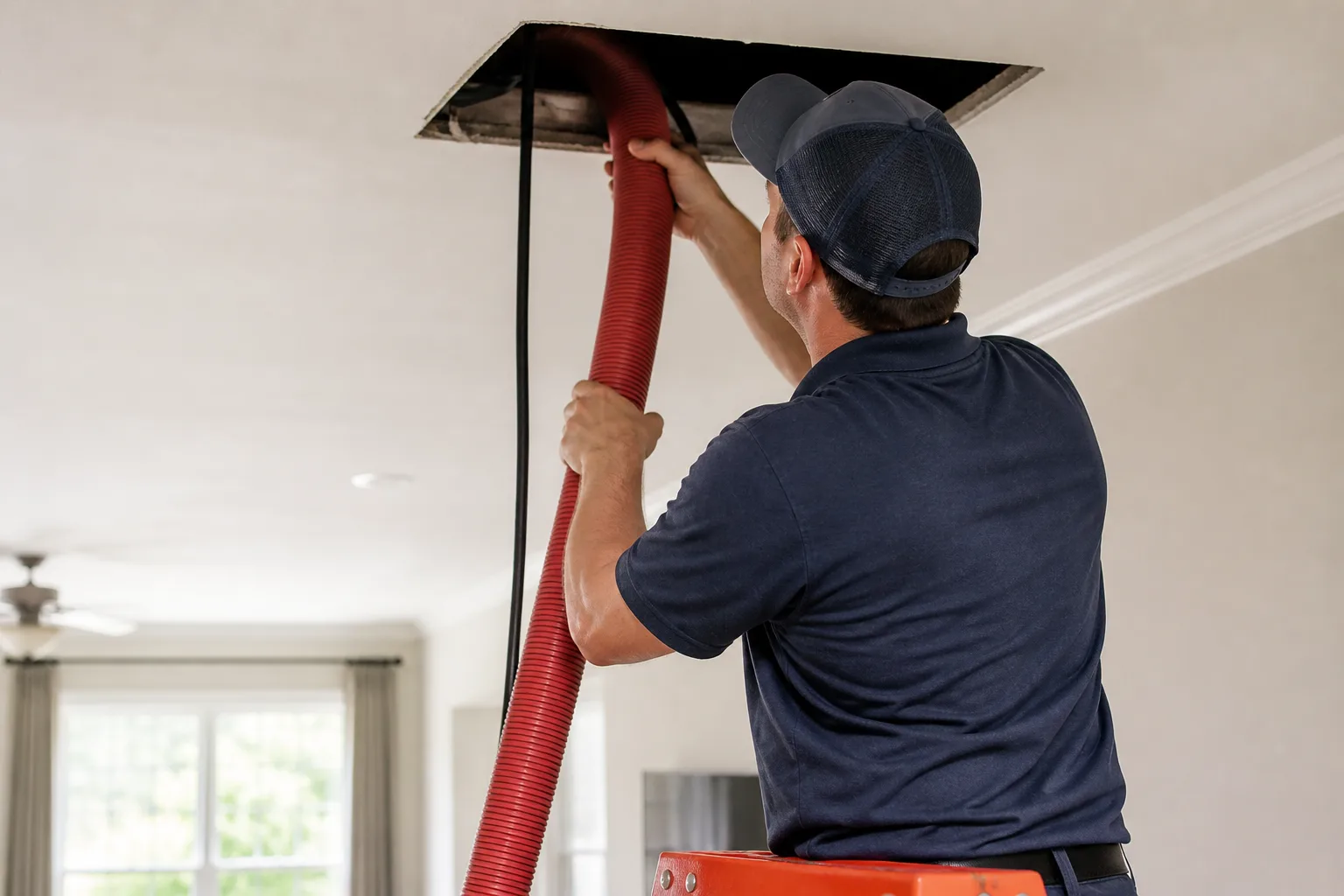
How to Choose the Right Air Duct Cleaning Company in Crabtree
In North Carolina, anyone with a van and a shop vac can legally advertise as an air duct cleaning company. There’s no state license required for the trade, which means your pre-hire questions are the only quality control in the process. Choose a company by asking what equipment it runs, whether it follows a recognized cleaning standard, and what proof of work it hands you afterward. If you’d rather skip the interview and get a straight answer about your own system, call (833) 509-5534 and we’ll walk you through it.
Why Crabtree Homeowners Have to Vet Duct Cleaners Themselves
Most home service trades in North Carolina require a license from the state board that oversees them. Duct cleaning doesn’t. There’s no exam, no required bond, no minimum equipment list, and no state inspector who shows up to check the work. That’s not a loophole anyone here created. It’s simply how the trade is regulated, and it puts the whole burden on you.
The practical result is a market with two very different kinds of operator. On one side you have companies that own real equipment and follow a documented process. On the other, you have operators who rent a vacuum, run a whip line through a couple of registers, and hand you a coupon-shaped invoice before the dust has settled. The cheap ones count on you not knowing what a proper job looks like.
So the right question isn’t “who’s cheapest in Crabtree?” It’s “can this company prove what it did?” That single reframe is what separates a useful conversation from a frustrating one.
What Does NADCA Membership Actually Tell You?
NADCA stands for the National Air Duct Cleaners Association, and membership is the closest thing this trade has to a credential. It matters less as a badge and more because members are held to the ACR standard: Assessment, Cleaning, and Restoration. Those three words describe the whole job, and each one means something specific.
Assessment means the company inspects the system before cleaning, looking at duct condition, contamination level, and whether the HVAC unit itself is part of the problem. A company that skips straight to the vacuum is skipping this step.
Cleaning means source removal, not a surface pass. Contaminants get physically dislodged and captured, not stirred up and left to settle back into the airstream.
Restoration covers what happens after: sealing gaps, addressing damaged sections, and making sure the system performs the way it should once the debris is gone.
Ask any Crabtree company you’re considering whether it follows the ACR standard. If the answer is a blank pause, that tells you something. NADCA membership isn’t mandatory, and plenty of capable operators aren’t members, but a company that can explain the standard in plain language is a company that knows what the finished job looks like.
What Equipment Questions Should You Ask Before You Book?
Equipment separates a real duct cleaning from theater. Three questions cover most of the ground, and you don’t need to be an HVAC technician to ask them.
- What kind of vacuum are you running, and how many CFM? A negative air machine pulls the whole system under pressure so dislodged debris goes into a collection unit instead of into your living room. Consumer shop vacs and “professional-grade” units that plug into a wall outlet don’t move enough air. Nikro HEPA-rated vacuums, for example, capture particles down to 0.3 microns, and that number is the difference between clean air and a fine dust film on every surface by evening.
- What brush system do you use? Rotary brush systems are the industry standard for mechanical cleaning because they make actual contact with the duct walls. Rotobrush is the name most serious contractors reach for. A company that only uses air pressure without brush contact is guessing at the buildup.
- Do you clean the air handler and coil, or just the branch ducts? This is the question that trips up cheap operators. Cleaning the branch runs while leaving the air handler untouched is like washing the pipes and ignoring the pump. The coil and blower are where a lot of the contamination lives.
One more worth adding: does the company run air filtration during the job? Abatement Technologies air scrubbers capture what gets dislodged before it recirculates through the house. That’s the difference between protecting your indoor air and temporarily making it worse.
How Should You Read Before-and-After Documentation?
Photos are the proof of work, but only if they show you something. A picture of a shiny register tells you nothing. Here’s what actually counts.
- Photos of the access panels themselves. Proper cleaning requires cutting access ports into the ductwork and sealing them afterward. If there are no access panels, there was no real cleaning.
- Brush contact on the duct walls. Interior shots showing the before condition, the brush in contact, and the after surface. Duct interiors are not always clean and white when you start, so look for a visible change, not a magazine gloss.
- Debris collected. A container holding what came out of the system. This is the least glamorous and most convincing photo of the bunch.
We hand before-and-after photos to every customer of the same ducts that were cleaned, not stock images from a brochure. Any company worth hiring should do the same without being asked. If a Crabtree company hesitates on documentation, that’s your answer.
When to call a pro: if you’ve pulled a register and found visible buildup, if you’re seeing dust settle on furniture within days of cleaning, or if anyone in the house has allergy symptoms that worsen when the HVAC kicks on, that’s a full-system assessment job, not a job for a rented machine.
Which Contract Terms Protect You?
A written scope of work is not paperwork for its own sake. It’s what keeps a job from drifting. Three terms in particular protect you in Crabtree, where older homes sometimes have duct runs that were modified or added over time.
- Itemized scope of work. Exactly which components get cleaned, how many runs are included, what happens with the air handler and coil, and the flat price for the job. One flat price per system agreed before work starts beats any per-vent quote that grows once the technician is standing in your hallway.
- Explicit inclusion of the return side. Returns pull air back into the system and collect debris just like the supply runs. A scope that lists supply registers only is a partial cleaning, and it deserves a partial price.
- What happens if mold is found mid-job. Mold is the one finding that changes the plan. Your contract should say in advance whether the company stops, documents it, and what remediation would involve, rather than discovering a new line item after the fact.
If the quote is a single number on a business card with no written scope, ask for the scope before you schedule.
Full-System IAQ Specialists vs. Single-Service Duct Cleaners
There’s a real place in Crabtree for both. Some homes need a straightforward duct cleaning and nothing more. Others have a bigger story: uneven airflow, musty odors when the system starts, high dust, or a coil that hasn’t been looked at in years. That second group tends to do better with a company that treats the whole air pathway as one system.
The difference shows up in scope. A single-service duct cleaner cleans ducts. A full-system indoor air quality specialist cleans, sanitizes, repairs, and seals, and handles related ventilation work like dryer vent cleaning as a named service rather than an afterthought. That matters in Crabtree because duct repair and sealing addresses the problem most cleaners leave open: energy loss and contamination re-entering through gaps in the ductwork. A cleaning that doesn’t address leaks is a cleaning you’ll repeat sooner.
Companies with air quality product lines can also integrate upgrades like Honeywell or Aprilaire filtration and humidity control into the same visit, which saves you a second appointment later. If your goal is simply a cleaner system, a single-service duct cleaner may do fine. If your goal is better air, look for the broader scope.
What Should You Ask on the Phone?
Four or five questions will tell you almost everything you need to know before anyone comes out to a Crabtree home. Write them down so the conversation doesn’t drift.
- Do you follow the NADCA ACR standard?
- What vacuum and brush system do you use, and how many CFM does the negative air machine pull?
- Is the air handler and coil included, or is that a separate line item?
- Will I get before-and-after photos of my own system?
- Is the price a flat rate per system agreed before work begins, or does it change once you’re on site?
The answers will sort the field quickly. A company that can’t name its equipment or won’t put scope in writing is telling you something even before the estimate is done.
Related services in Crabtree: If your system needs more than ducts, we also handle air duct cleaning as a full-pathway service and HVAC cleaning for the unit and coil.
The Bottom Line
North Carolina leaves duct cleaning largely unregulated, so the quality of your job comes down to the questions you ask. Favor companies that follow a documented standard, name their equipment, include the air handler and coil in scope, clean the return side, put a flat price per system in writing, and hand you before-and-after photos of your own ducts. Those aren’t premium extras; they’re the baseline of a real cleaning. Our technicians have up to 11 years of experience, and we use the same equipment commercial restoration crews rely on, Rotobrush and Nikro, because your home deserves the same standard.
If you’re in Crabtree and need help, Air Duct Cleaning Crabtree offers free estimates. Call (833) 509-5534. We answer 24/7. Fast dispatch from 7am to 7pm, Sunday through Friday. You can also start with a look at Air Duct Cleaning Crabtree to see how the full process works.
Frequently Asked Questions
You know because you have documentation: before-and-after photos of your own ducts, shots of the access panels the crew cut and sealed, and the debris collected during the job. Ask for this before booking. A company that follows the ACR standard will provide it without prompting, and one that hesitates is telling you what the photos would show.
No. Duct cleaning is not a licensed trade in North Carolina, and NADCA membership is voluntary. It’s still a useful signal, because members are held to the ACR standard for assessment, cleaning, and restoration. A non-member company can do excellent work; the point is whether it can explain its process in the same terms. Call (833) 509-5534 if you want to talk through what your Crabtree home actually needs.
Cheap quotes usually leave parts of the system out. A low price often means supply registers only, no air handler or coil, no brush contact on the duct walls, and no negative air machine with real CFM behind it. The price is lower because the job is smaller, not because the company found a better way to do it. One flat price per system with a written scope is the honest comparison, and free estimates make that easy to check in Crabtree.
Most homes don’t need it on a fixed calendar schedule. Look at conditions instead: visible buildup at the registers, dust returning to surfaces within days, musty odors when the system runs, uneven airflow, or allergy symptoms that flare when the HVAC kicks on. Older homes in Crabtree with modified duct runs benefit from an assessment sooner, especially if a renovation has happened. Call for a free estimate and we’ll tell you what your system actually looks like.
Written by the team at Air Duct Cleaning Crabtree.
Need Air Duct Cleaning Help?
Call Air Duct Cleaning Crabtree - the local pro we connect you with is licensed and insured, with free written estimates in Crabtree.
(833) 509-5534