
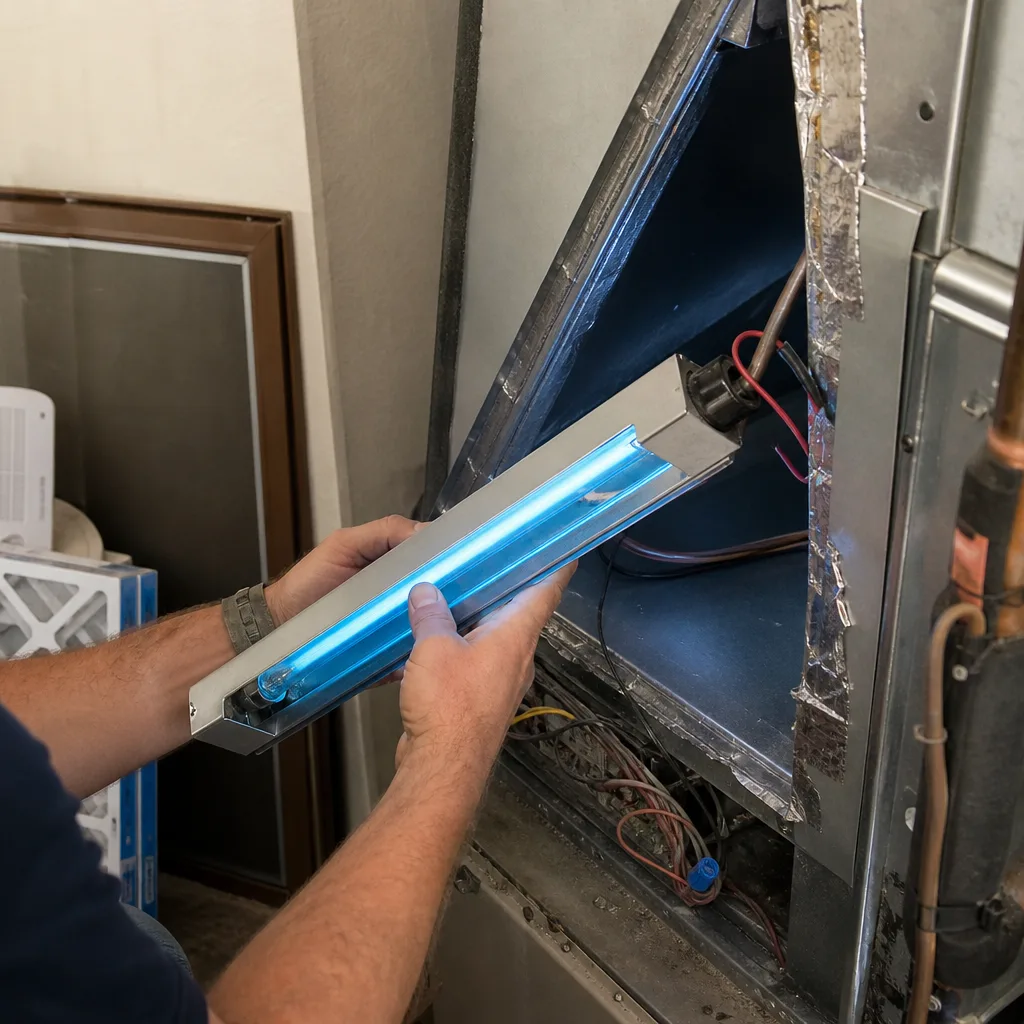
Last updated November 23, 2026
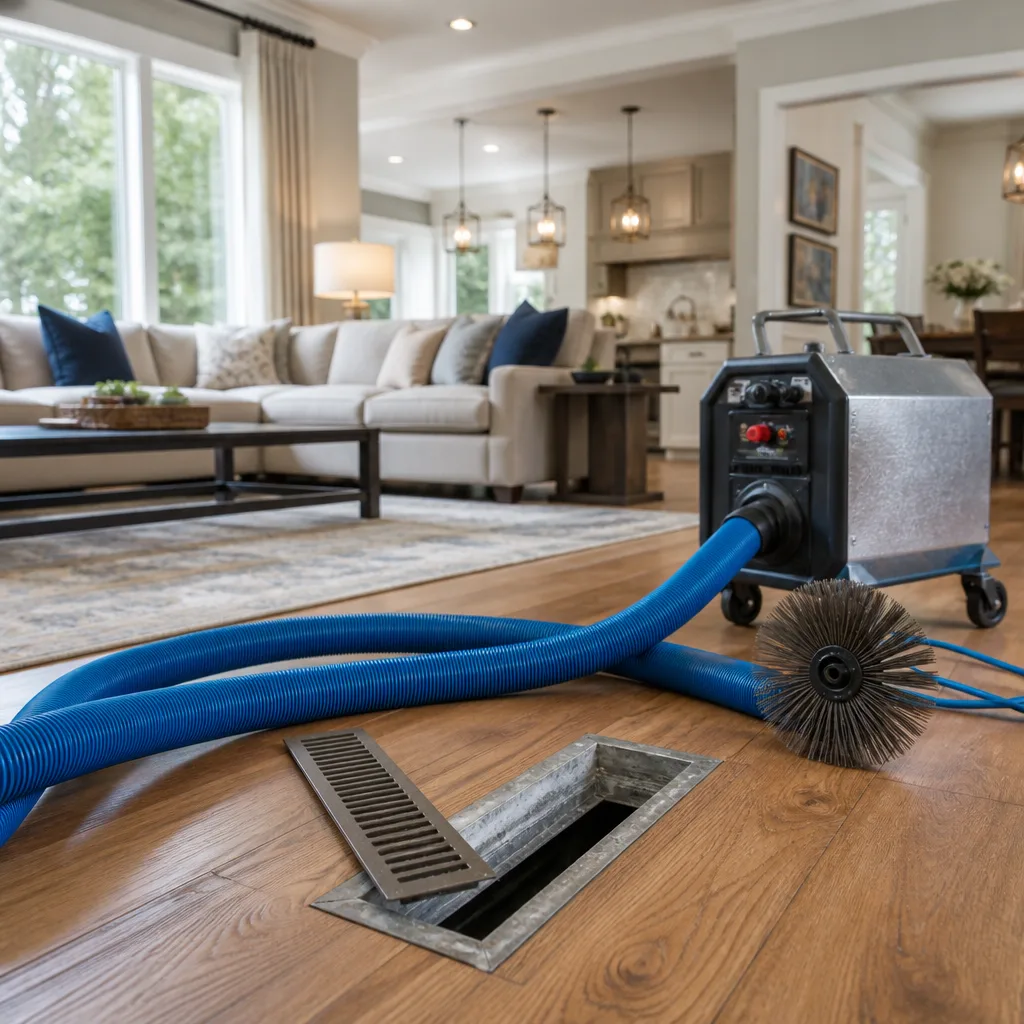 Whole-home duct cleaning
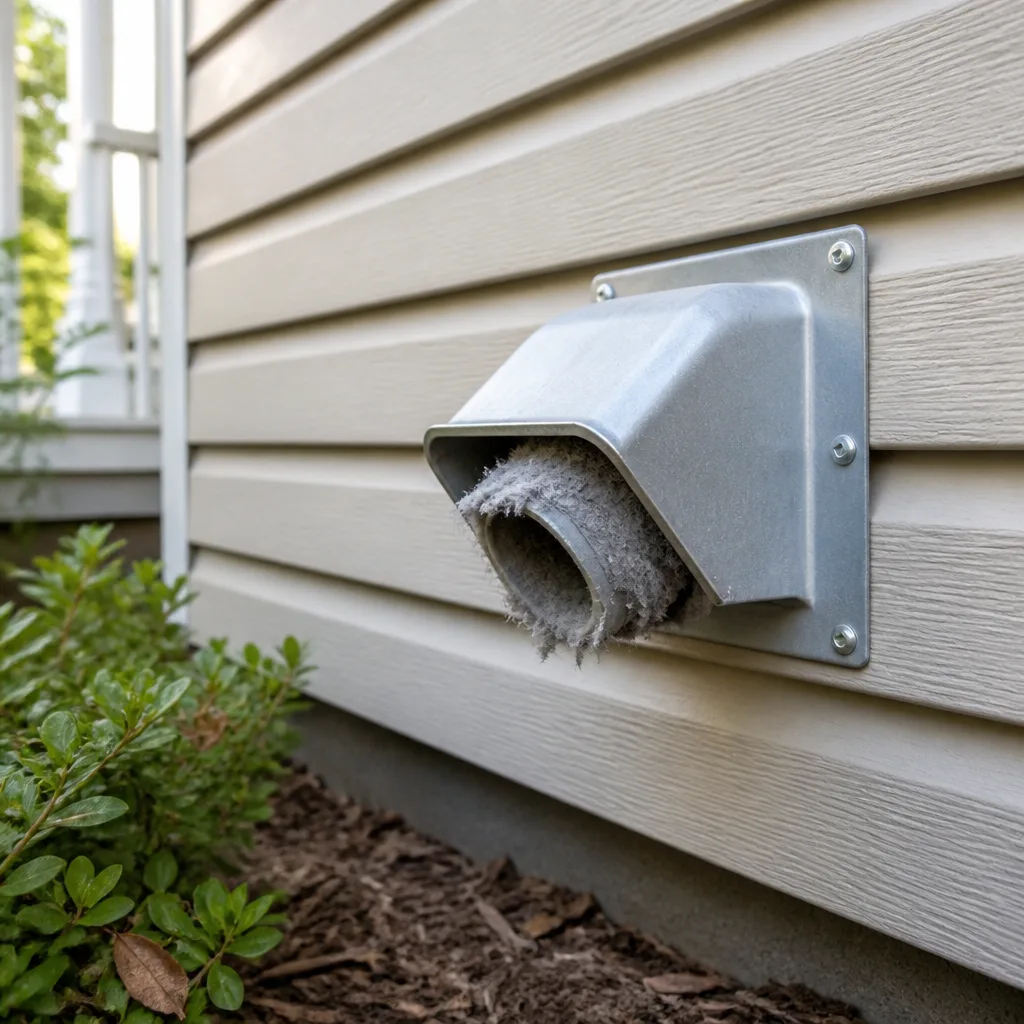 Dryer vent cleaning
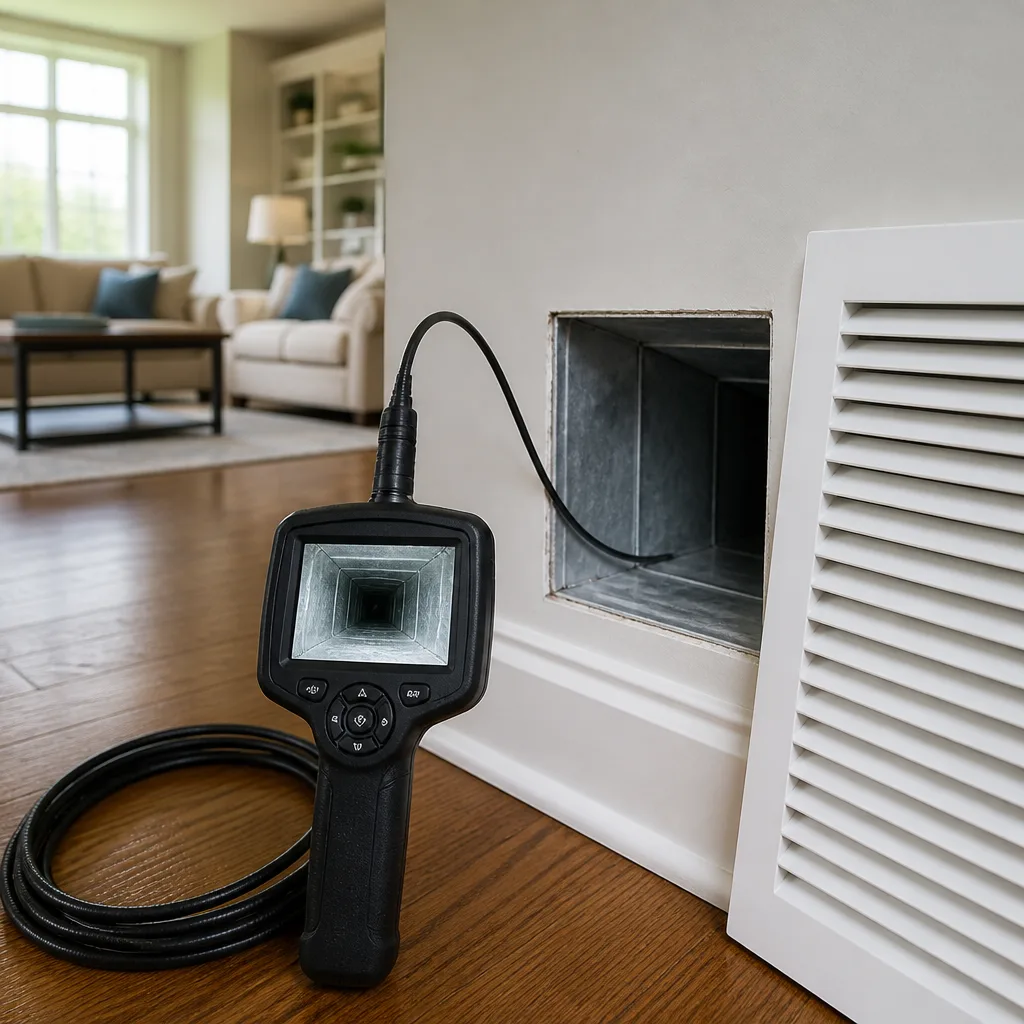 Camera inspection
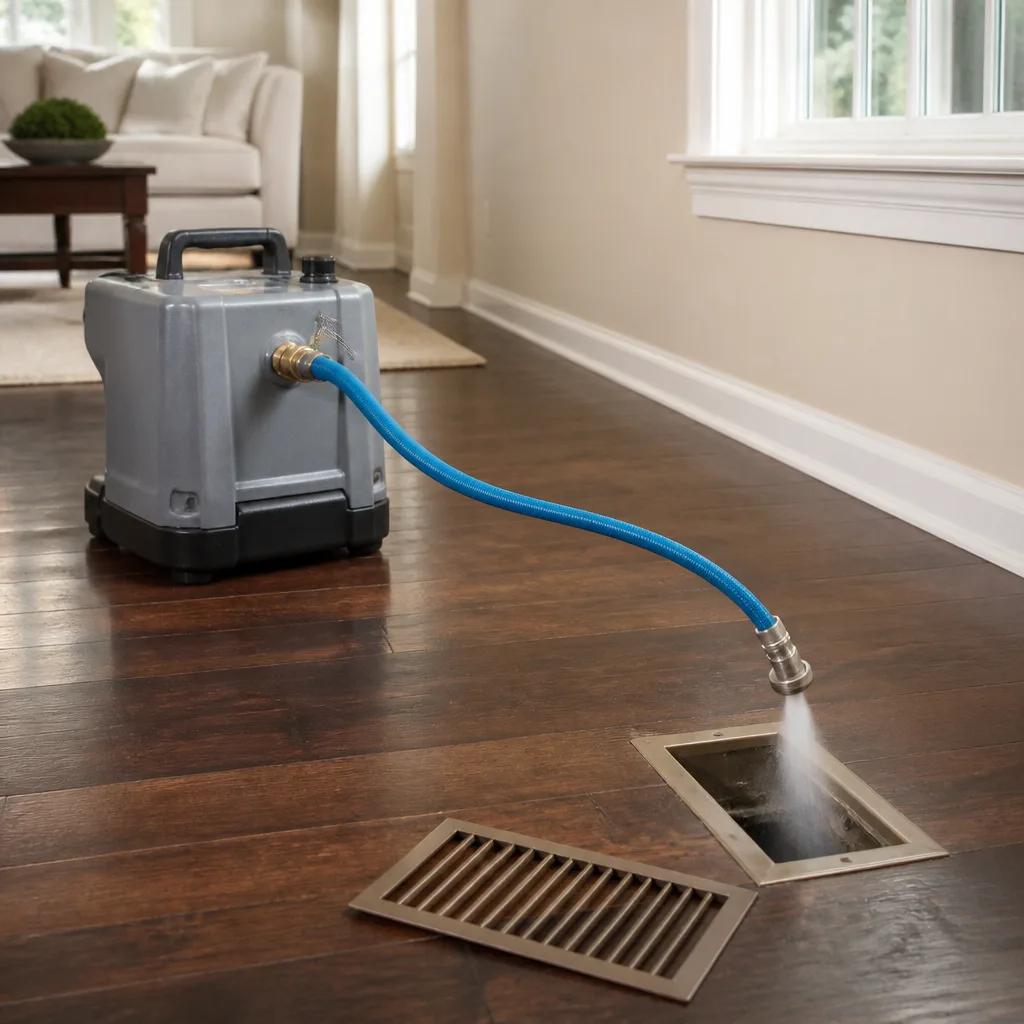 Sanitizing & deodorizing
Whole-system duct and dryer vent check with before-and-after photos - you see exactly what came out of your vents
That "$99 whole-house special" is a bait ad - the real number appears once they are in your hallway, or the "clean" is a shop-vac at the register. We photograph the inside of your ducts before and after instead.
Air Duct Cleaning Warning Signs: A Crabtree Homeowner’s Reference Guide
A musty smell that shows up only when the HVAC first kicks on and clears a few minutes later is a different problem than one that lingers all afternoon. Yet both get called “duct smell,” and both get treated the same way by most companies. That’s the mistake this guide is built to fix. Reading a warning sign correctly is worth more than any cleaning package, because the right fix starts with the right diagnosis. Below you’ll learn which cues point to contamination, which point to a mechanical or structural failure, and which ones mean shutting the system down today. This reference is written for Crabtree homeowners who’d rather understand their system than guess at it.
Quick Answer
Air duct cleaning warning signs in Crabtree usually show up as four patterns: odors tied to HVAC operation, visible residue at the registers, uneven or weak airflow room to room, and dust or allergy symptoms that track your heating and cooling schedule rather than the season. Any one of these is worth a professional look. A burning smell, visible mold growth, or a sudden airflow collapse with the blower running is a stop-and-call signal.
Styles & brands we work with
- Whole-home duct cleaning
- Dryer vent cleaning
- Camera inspection
- Sanitizing & deodorizing
Table of Contents
- The Symptom-to-Cause Matrix: What Each Odor Is Telling You
- Is It a Blockage, a Disconnection, or a Declining Blower?
- Reading the Registers: Black Residue, White Powder, Visible Debris
- Health Patterns That Point to Ducts vs. Filtration
- Which Signs Mean Stop, and Which Can Wait a Week
- Why Crabtree’s Climate and Housing Shape What You’ll See
- A 5-Step Walkthrough You Can Do Yourself
- What a Real Professional-Grade Cleaning Actually Involves
The Symptom-to-Cause Matrix: What Each Odor Is Telling You
Smell is the most useful diagnostic signal a duct system gives you, and the most commonly misread. A musty, earthy odor is the classic signature of biological growth on a moist surface, usually the evaporator coil, the drain pan, or the interior liner of a return duct. A dusty, chalky smell that blooms when the fan starts is often settled particulate getting lifted from dirty duct walls. A chemical or solvent smell has no business coming from a ventilation system and usually traces back to something inside the system off-gassing or a chemical introduced into it. A burning, hot-wiring, or metallic smell is a mechanical or electrical event and needs the system shut down.
The timing matters as much as the odor itself. Smells that appear within the first minute of operation and fade suggest the source is in the air handler, the coil, or the supply trunk closest to the unit. Smells that persist through the whole run and fill specific rooms point to contamination in that branch of ductwork or a leak pulling in air from a crawlspace, attic, or garage.
Here’s how we map the most common odors in Crabtree homes:
- Musty or wet-earth: microbial growth on the coil, drain pan, or duct liner; moisture intrusion in a return.
- Dusty or chalky: accumulated particulate on duct walls and diffusers, lifted when the fan comes on.
- Chemical or solvent: off-gassing materials inside the system, or a cleaner used improperly upstream.
- Burning or metallic: electrical fault, seized blower, or overheating motor. Shut down and call.
- Exhaust or fuel smell: a possible backdraft or a disconnected flue. Treat as an urgent safety issue.
If the odor is biological and the system is otherwise running normally, the problem is a cleaning-and-sanitizing job. If it’s mechanical, cleaning won’t fix it, and we’ll tell you so.
Is It a Blockage, a Disconnection, or a Declining Blower?
Weak airflow and uneven cooling get blamed on dirty ducts far more often than the ducts deserve. In our experience, roughly three separate problems produce the same symptom, and only one of them is solved by cleaning. Knowing which is which saves you money and inconvenience. Blockage is a restriction inside a duct run: crushed flex duct, a collapsed liner, a damper pushed shut, or a heavy debris load in a return. A disconnection is a physical separation between duct sections or at a boot, letting conditioned air dump into the attic or crawlspace instead of the room. A declining blower is a mechanical issue with the air handler, and it will persist no matter how clean the ducts are.
There’s a simple field test that tells you which one you’re dealing with:
- Check airflow at every register with the system running. Note which rooms are weak and which are normal. Weak spots clustered in one area usually mean a branch blockage or disconnect.
- Feel the air at the air handler plenum. Strong air leaving the unit with weak air at the registers means the loss is downstream, in the ducts.
- Listen at the return grille. A whistling or hissing return means it’s starved and likely undersized or restricted.
- Look for frost, condensation, or dust streaks at duct joints. Dust streaks at a seam point to a leaking disconnect.
- Note whether the issue is recent or long-running. A sudden drop points to a mechanical event; a slow decline points to gradual contamination.
Airflow that collapses all at once with the fan still running is the most urgent pattern. It suggests a duct has come apart, which dumps air into a cavity and can pull contaminants into living space. That’s a same-day call, not a watch-and-wait.
Reading the Registers: Black Residue, White Powder, Visible Debris
Pull the register cover off and look inside with a flashlight. Most homeowners are surprised at how much the duct interior tells you in thirty seconds. Every material you see has a likely upstream cause, and matching the residue to its source is what separates a real diagnosis from a guess. We use this visual check on every air duct cleaning assessment in Crabtree before touching a tool.
- Black, sooty residue on duct walls or the supply side of the coil: usually particulate that has bonded to a slightly oily or moist surface. Often a sign of long-term contamination, and common near kitchens or where a return is poorly placed.
- White powder or crusty deposits: can be mineral dust, dried construction material, or efflorescence pulled in from a damp crawlspace. It’s a red flag for a source of moisture nearby.
- Visible lint or hair inside a return: normal in small amounts, concentrated in a wad means the return is starving and drawing from a contaminated area.
- Dust patterns concentrated at the diffuser face: a leak at the boot or diffuser pulling fibrous ceiling or insulation material into the airstream.
- Rust stains or water lines in the duct: active or historic moisture, which usually wakes up biological growth.
Black residue and white powder are both cleaning-and-investigation problems. Rust and water lines are a moisture problem that cleaning alone won’t solve. In Crabtree’s humidity, a small water line in a duct can turn into a much larger growth problem within a single cooling season, so we treat any water evidence as a priority item.
Health Patterns That Point to Ducts vs. Filtration
Occupant symptoms are the most misinterpreted warning sign of all. Seasonal allergies follow the pollen calendar; allergy-like symptoms tied to HVAC operation follow the fan. If a family member’s congestion, itchy eyes, or cough gets worse an hour after the system comes on and improves on mild days when the system is idle, the trigger is in the airstream. That still doesn’t automatically mean the ducts are dirty. Filtration failure and duct contamination produce nearly identical symptoms, and telling them apart is the entire job.
Here’s the distinction we walk Crabtree homeowners through:
- Filtration failure: symptoms track dust on surfaces and get worse in every room with a supply. The filter may be chronically loaded, the wrong MERV, or bypassing its frame. Cleaning the ducts won’t fix it; the filter and its housing need attention.
- Duct contamination: symptoms cluster in specific rooms and track the supply branches. There’s usually a matching odor, and register inspection turns up residue. This is a cleaning-and-sanitizing job.
- Both at once: common in Crabtree homes with older systems where no one has touched the ducts in years and the filter setup was never upgraded. Here the right answer is cleaning plus a better filter, done in the same visit.
We can’t diagnose a medical condition and we don’t try. But we can tell you whether your airstream is carrying a heavier particulate load than it should. When symptoms are tied to the fan and registers show residue, the right move is to look at the whole air pathway, not just the filter slot.
Which Signs Mean Stop, and Which Can Wait a Week
Some warning signs need immediate action; others deserve a week of observation. Getting this wrong in either direction costs you. Waiting on a safety issue is dangerous; calling for a routine cleaning before you’ve confirmed a pattern just buys you an unnecessary bill. Here’s the divide we use.
Stop and call a professional today:
- Burning, hot-wiring, or metallic smell from any register or the air handler.
- Visible mold growth on the interior of the duct or the coil that you can see.
- A sudden airflow collapse across the house with the blower running.
- Exhaust, fuel, or sulfur smell inside the living space.
- Sparks, smoke, or the air handler tripping the breaker repeatedly.
Monitor for a week, then decide:
- Mild musty odor that comes and goes with weather.
- Moderate dust accumulation at the registers that returns within a few weeks of cleaning.
- A slow decline in airflow in one room, with the rest of the house normal.
- Allergy-type symptoms that track HVAC use but are mild and consistent.
If a monitored sign keeps showing the same pattern after a week of observation, book an assessment. When a door, panel, or connection opens a safety concern for the system, we answer 24/7. Fast dispatch from 7am to 7pm, Sunday through Friday. Saturday calls are booked into the next opening.
Why Crabtree’s Climate and Housing Shape What You’ll See
Crabtree sits in a humid subtropical stretch of western North Carolina where summers are long, sticky, and hard on any system that moves air. The single biggest driver of duct problems here is moisture. A cooling coil that stays wet for most of the year plus a return drawing from a damp crawlspace is the classic recipe for musty odor and biological growth. During the heating season, the same climate swings from humid to dry, and duct systems that were borderline in the summer start to show small gaps and dust streaks as the materials expand and contract.
The area’s housing stock multiplies the effect. Crabtree has a mix of older homes with original trunk-and-branch ductwork and newer construction with long flex runs through unconditioned attics. Attic flex ducts are hot, prone to sagging, and quick to develop disconnects at fittings. Crawlspace returns are common and pull in moisture and soil dust when they lose a joint. Homes near Crabtree Valley sit in low ground where humidity runs higher than the surrounding hills, and we see more moisture-driven duct complaints in that pocket than almost anywhere else locally.
Our technicians have up to 11 years of experience working systems in this climate, and the pattern is consistent: when a Crabtree homeowner calls about a musty smell, the source is moisture nine times out of ten, and the answer is usually a combination of cleaning, treating the growth, and sealing the leaks that let the moisture back in. Repairing and sealing ducts is the part most cleaners skip, and it’s the part that keeps the problem from coming straight back.
A 5-Step Walkthrough You Can Do Yourself
You don’t need tools or training to catch most duct warning signs. You need fifteen minutes, a flashlight, and a notebook. Walk through this routine every few months and around the change of seasons. If something changes, you’ll know exactly when it started. That record is worth more to a technician than any description over the phone.
- Sniff test by zone. Walk room to room with the system on and off, note any odor, and pin down whether it appears with the fan running or independent of it. Write down the room and the timing.
- Register check. Remove one register in each major area and photograph the interior with a flashlight. Look for black residue, white powder, rust, or water lines. Compare the photos every few months.
- Airflow sheet. Use a strip of tissue at each supply to gauge rough airflow and note the weakest rooms. Track whether the weak spots grow.
- Filter and housing. Check the filter and its frame. A filter that’s bowed, bypassing its housing, or coated in dust within weeks of a change is a filtration problem, not a duct problem.
- Dust recurrence. If dust reappears on furniture within a couple of weeks of a deep clean, the airstream is carrying more particulate than it should, and the source is likely ducts or a leaking return.
Photograph the return, take notes on timing, and bring the whole file to the assessment. That’s how we skip the guesswork and go straight to the source.
What a Real Professional-Grade Cleaning Actually Involves
The gap between an honest duct cleaning and a cheap one is the equipment and the scope, not the sales pitch. A surface job runs a consumer vacuum to a couple of registers, dislodges debris, and leaves the rest of the system untouched. That’s why so many Crabtree homeowners describe a “cleaning” that made things worse: dust got stirred up, no filtration captured it, and no one addressed the leaks feeding the problem. Professional cleaning starts with protecting the indoor air during the job. We run Abatement Technologies air filtration throughout the service, capturing what we dislodge before it recirculates into rooms.
For the mechanical work, we use Rotobrush rotary brush systems, the same equipment commercial restoration crews rely on, and Nikro HEPA-rated vacuum equipment that captures particles down to 0.3 microns. That combination means the ducts get physically agitated and the debris gets captured, not just loosened. The scope covers the whole air pathway: cleaning the supply and return trunk, the branch runs, the air handler, and the coil face. Sanitizing follows cleaning, not before. Repair and sealing close the loop, which is the step that keeps contamination from walking back in through the same leak.
Then there’s the part most companies don’t offer. Honeywell and Aprilaire filtration and humidity products can be integrated during the same visit, so a system that was passing dust and trapping moisture comes out the other side with better filtration built in. When the whole system is involved, we also handle HVAC cleaning, and because ventilation safety matters beyond the ducts, we treat dryer vent cleaning as a full service of its own. The cleaning is one flat price per system agreed before we start, and you get before-and-after photos of your own ducts so you can see what was done. The local pro we connect you with is licensed and insured as the state requires.
Common Mistakes to Avoid
- Treating a mechanical problem as a cleaning job. If airflow has collapsed, a burning smell is present, or the blower is struggling, no amount of cleaning will fix it. Shut the system down and get it assessed.
- Booking on the lowest coupon and expecting the highest scope. A per-vent teaser price almost always means a surface job on the visible registers and nothing else. Ask what the price covers before you book.
- Cleaning without sealing. If a return in the crawlspace is pulling in damp soil dust, cleaning will make the ducts look right and leave the cause in place. Repair and sealing belongs in the plan.
- Ignoring the filter housing. A filter that’s the wrong size, bowed, or bypassing its frame lets air past unfiltered. It’s the cheapest fix on this page and the one most often missed in Crabtree.
- Mistaking dryer lint for a duct issue. Lint at the dryer, or the machine taking longer to dry, is a dryer vent problem, not an HVAC one. It’s a safety item on its own and needs its own visit.
- Never photographing the before and after. A duct job you can’t see is a job you have to take on faith. Ask for before-and-after photos of your own system.
- Skipping the register check after cleaning. Walk the system once a month after a cleaning, and if the residue returns within weeks, the source was never addressed. Call it back in.
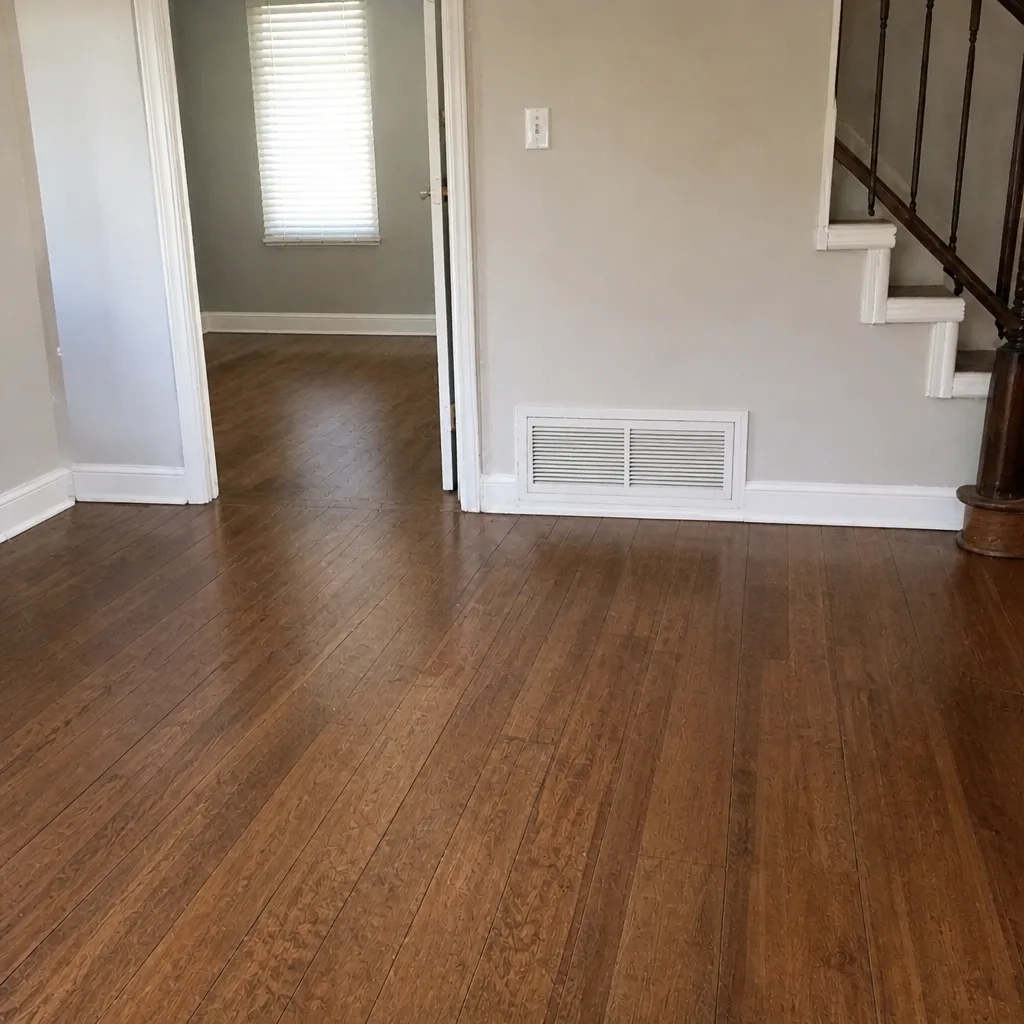
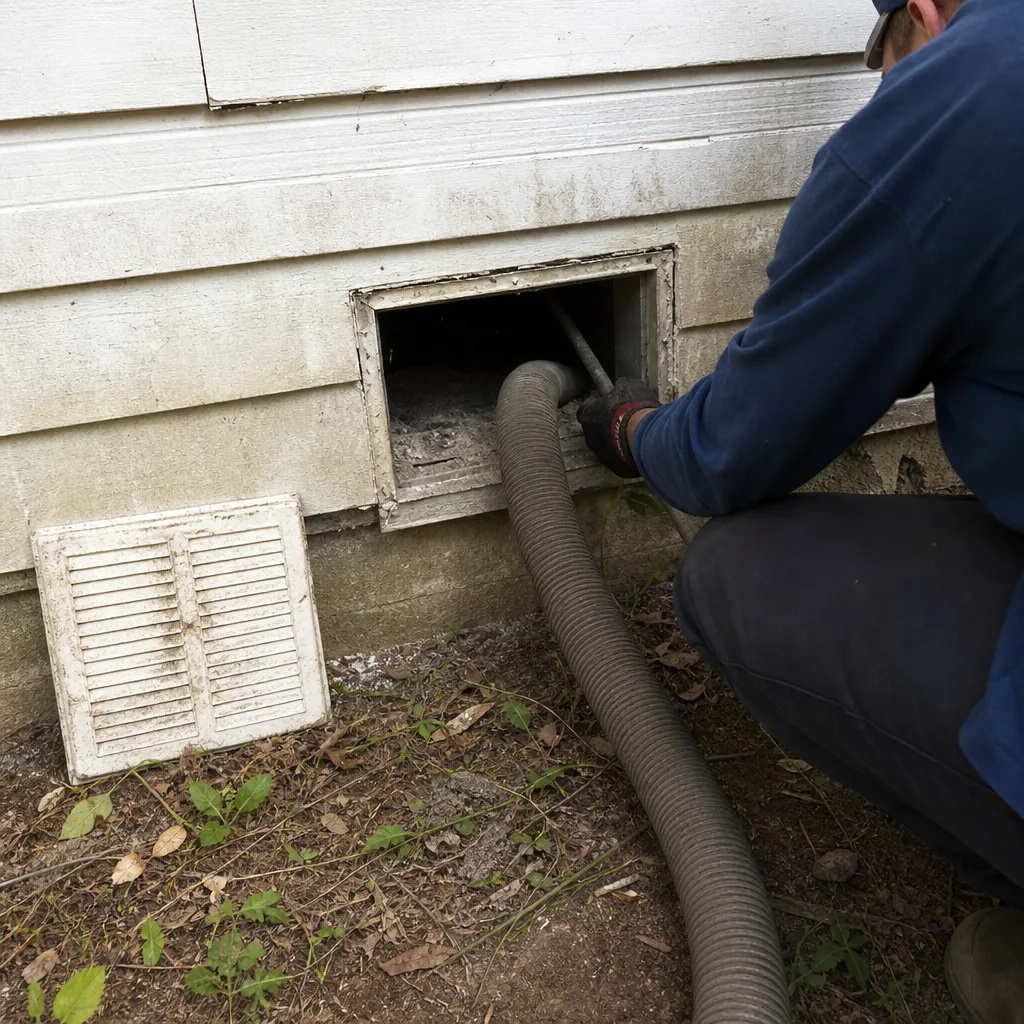
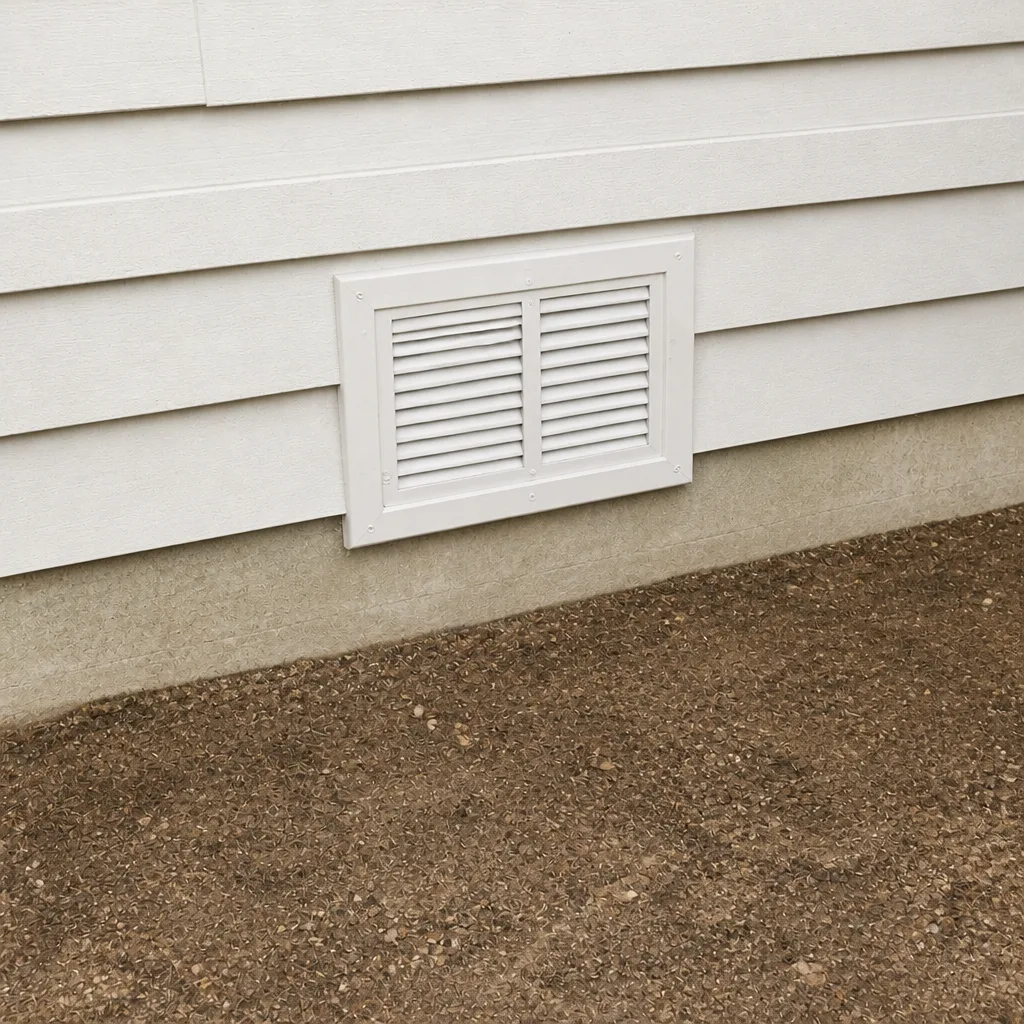
See the difference
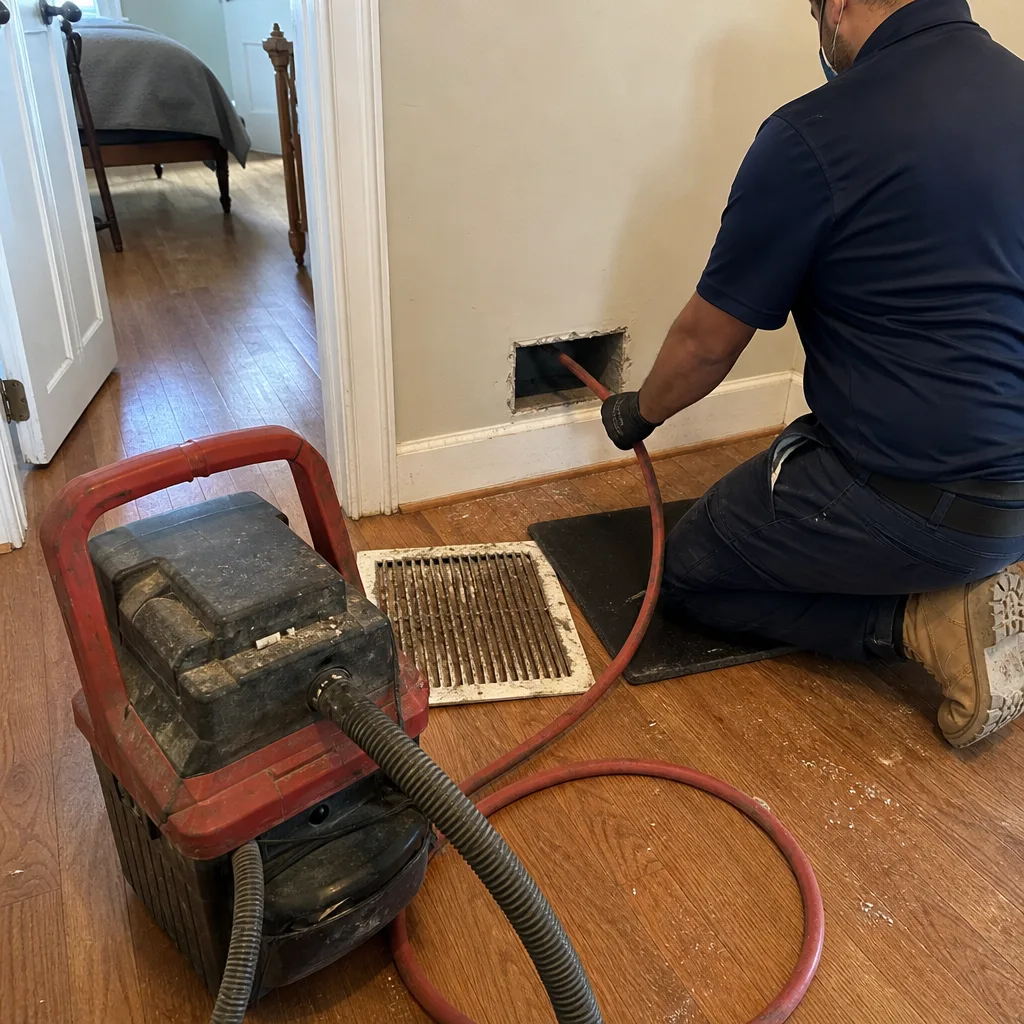 Before
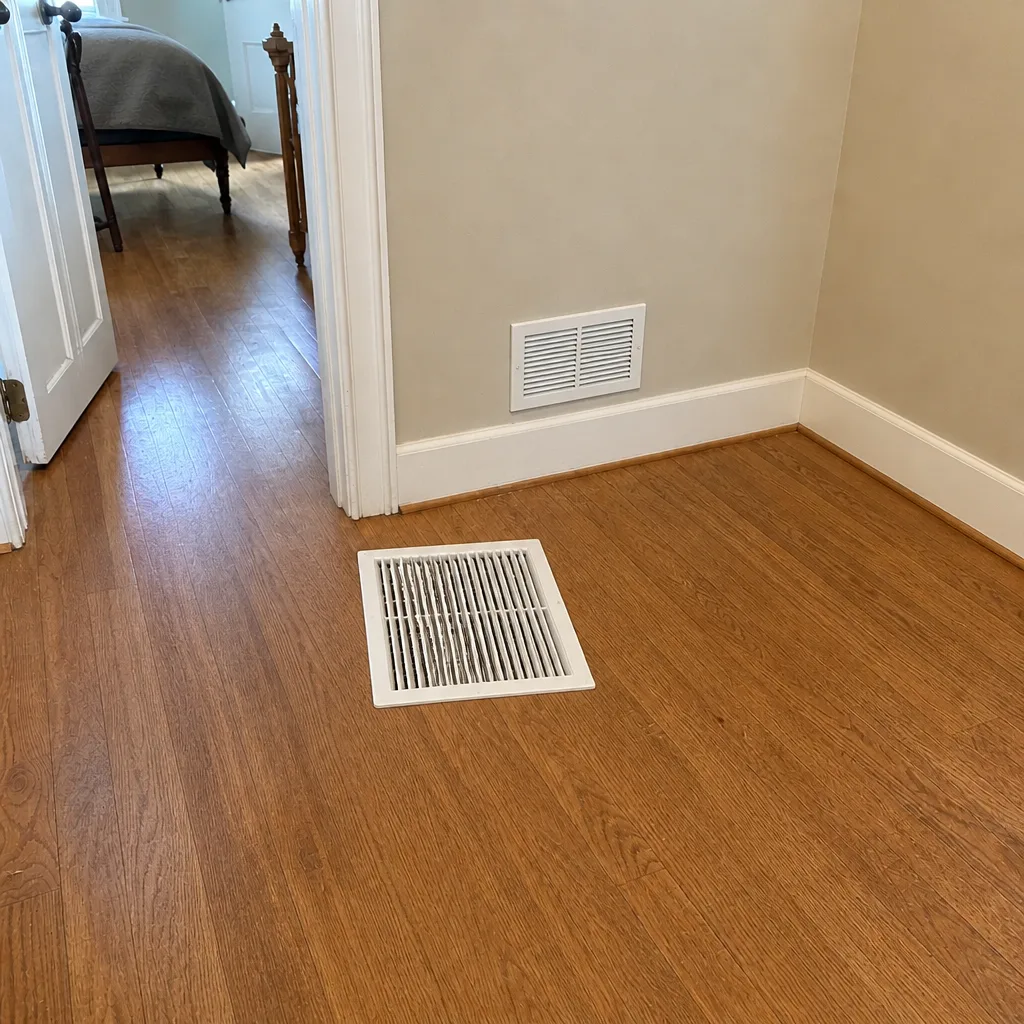 After
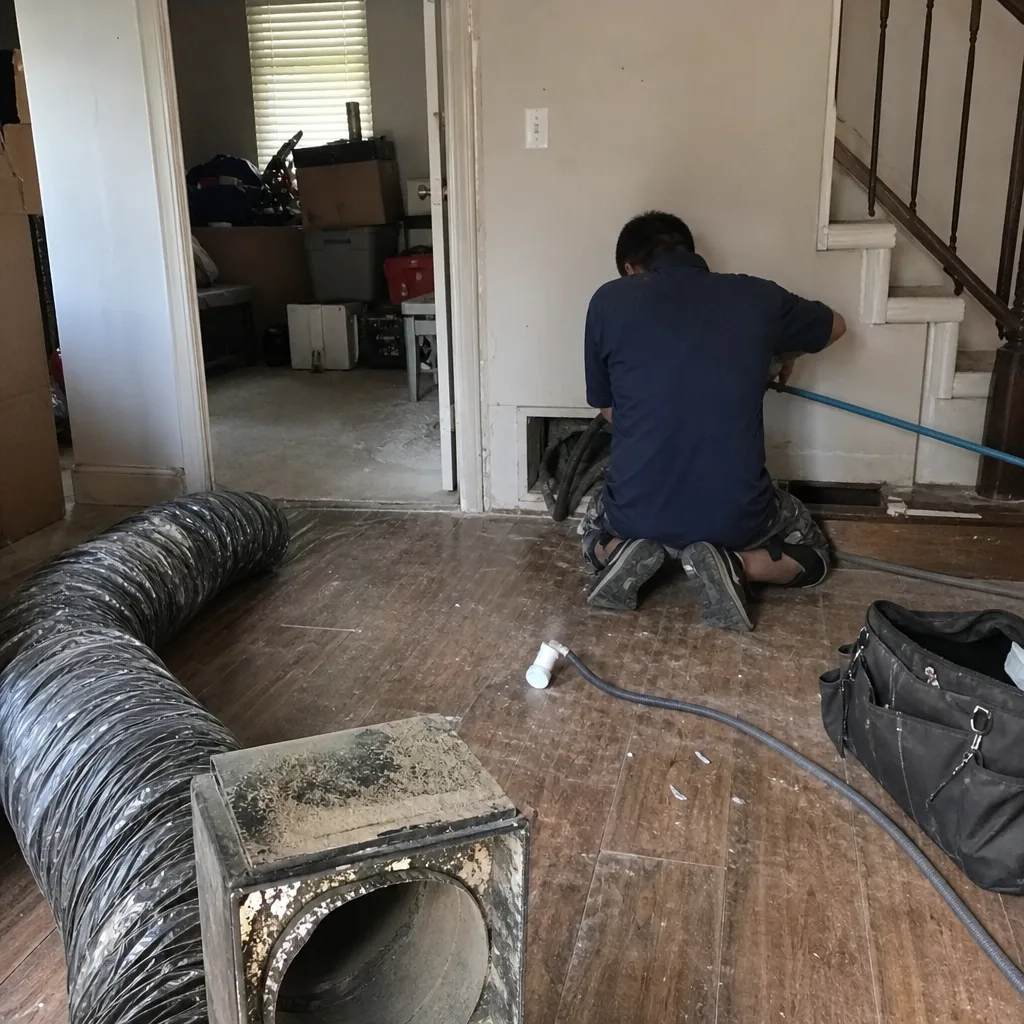 Before
 After
 Before
 After
When to Call a Professional
Call a professional when the warning signs line up into a pattern rather than a single blip. A musty smell that reappears with every cooling cycle, dust on furniture within weeks of a clean, airflow that’s weak in the same rooms month after month, or residue you can photograph at the register all deserve a real assessment. Call immediately for burning smells, visible mold, exhaust odors, or a sudden airflow collapse. The rest can be watched for a week. Air Duct Cleaning Crabtree offers free estimates in Crabtree, and you’ll get a written estimate that sets the final price before any work starts. Call (833) 509-5534 to book a visit. We answer 24/7, and fast dispatch runs from 7am to 7pm, Sunday through Friday.
Frequently Asked Questions
If airflow gets weak or uneven while the blower is running, or you smell burning, the problem is mechanical or structural and cleaning won’t fix it. If the ducts are visibly soiled, the smell is musty and tied to HVAC operation, and dust returns within weeks of a clean, it’s a cleaning job. When in doubt, describe both symptoms to a technician and let the assessment sort it out. Call (833) 509-5534 for an exact quote. Estimates are free.
No. A musty smell often comes from the cooling coil, drain pan, or a damp return rather than the duct walls themselves. It’s a moisture signal first and a duct-contamination signal second. Where in the system the smell originates determines what gets cleaned and what gets sealed. Cleaning without addressing the moisture source brings the smell right back.
Air duct cleaning in Crabtree is priced per system, not per vent. The whole-system price can vary with the number of trunk and branch runs, accessibility, whether sanitizing and sealing are included, and whether a filter upgrade is part of the job. We set one flat price per system in a written estimate before work begins, and the estimate is free. Call (833) 509-5534 for a quote specific to your system.
A cheap quote usually reflects a smaller scope: a vacuum at a couple of registers, no mechanical agitation of the duct walls, no HEPA-grade capture, and no repair or sealing. The price isn’t wrong for what it covers, but it doesn’t solve the problem most Crabtree homes actually have. Ask every company exactly which parts of the system they clean and what equipment they use.
Ask for before-and-after photos of your own ducts, and walk the register check yourself after the visit. A real cleaning leaves visible residue gone at the diffuser faces and dust recurrence delayed for months, not weeks. If a company can’t show you photos and explain what was done, that’s the answer.
Most homes don’t need it on a fixed calendar. It’s driven by signs: a musty odor, visible residue, dust recurrence within weeks, or a recent renovation that put construction dust into the returns. In Crabtree’s humidity, moisture evidence in a duct is the most common trigger to act. A filter that’s loaded within weeks of a change is a stronger signal than an annual reminder. Call (833) 509-5534 for an exact quote on your system. Estimates are free.
The Bottom Line
Most duct problems announce themselves before they become expensive. Odor timing tells you whether the source is the coil, the supply trunk, or a branch. Airflow patterns tell you whether the problem is blockage, disconnection, or blower decline. Register residue tells you what’s upstream. And health patterns tied to the fan tell you whether to look at ducts or filtration. Learning to read those four signals correctly is what separates a confident decision from a guess. When the signs point to a cleaning, a proper job means equipment that agitates and captures, sanitizing, and repair and sealing so the problem doesn’t come back. That’s the standard we hold on every Air Duct Cleaning Crabtree visit.
Call (833) 509-5534 for a free estimate. We answer 24/7. Fast dispatch from 7am to 7pm, Sunday through Friday. The local pro is licensed and insured as the state requires, you get one flat price per system agreed before work starts, and before-and-after photos of your own ducts come with the job. If you’d like to see how we handle the rest of the ventilation system, you can read about our dryer vent cleaning or HVAC cleaning options.
Written by the team at Air Duct Cleaning Crabtree.