
Last updated November 23, 2026
 Whole-home duct cleaning
 Dryer vent cleaning
 Camera inspection
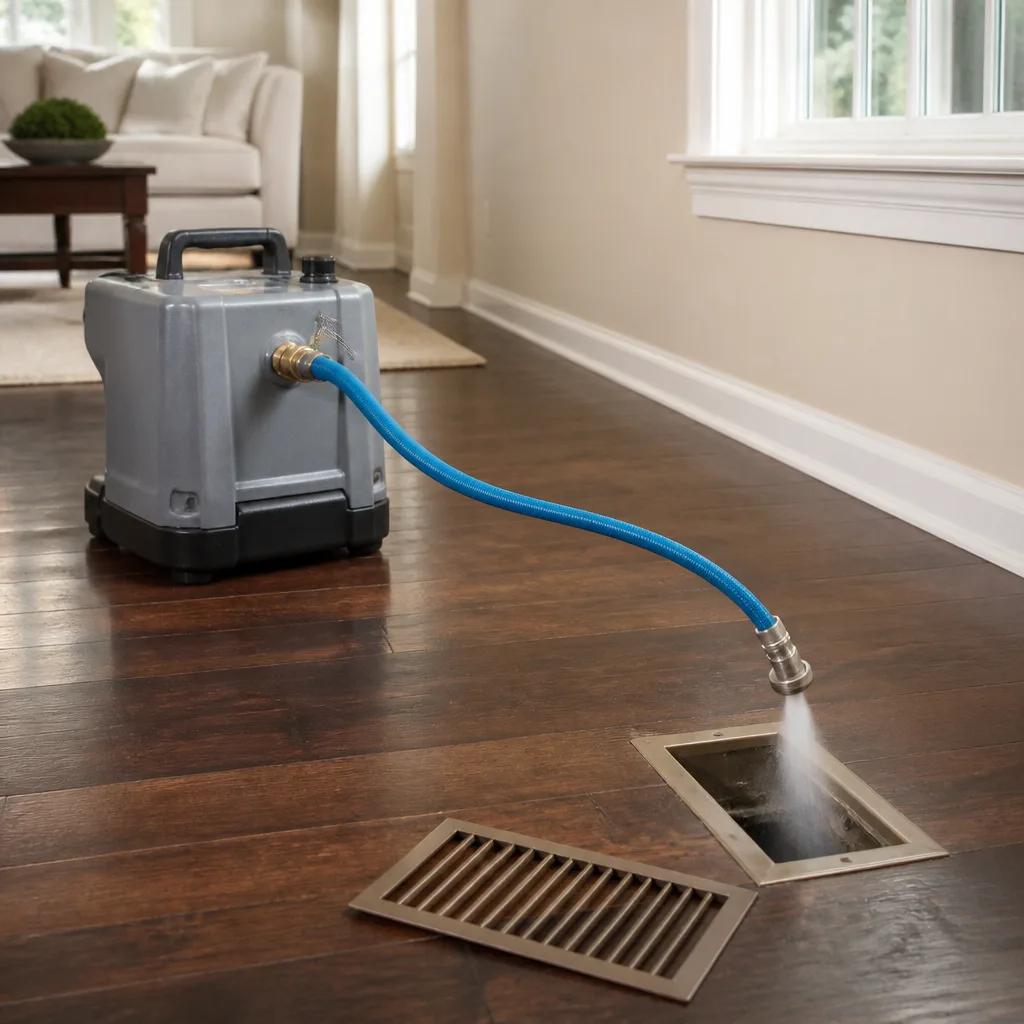 Sanitizing & deodorizing
Whole-system duct and dryer vent check with before-and-after photos - you see exactly what came out of your vents
That "$99 whole-house special" is a bait ad - the real number appears once they are in your hallway, or the "clean" is a shop-vac at the register. We photograph the inside of your ducts before and after instead.
The Complete Guide to Air Duct Cleaning in Crabtree
Most duct cleanings don’t fail because the technician didn’t scrub hard enough. They fail because a critical component got skipped entirely. A single service visit that cleans every visible run of ductwork but never opens the air handler cabinet can leave a cleaned system re-contaminated within days, since the fan and coil housing are where dust, mold spores, and debris collect first. In Crabtree, where humid summers and heavy clay soil keep the outdoor air loaded with particulate, that oversight matters more than it would in a drier climate. This guide walks the entire air pathway from return intake to supply register, so you know what a real full-system cleaning involves and what to ask for before you book one.
Quick Answer
Air duct cleaning in Crabtree is a full-pathway process that cleans, sanitizes, repairs, and seals the entire duct system, including the air handler cabinet most basic services skip. A professional-grade job uses negative-pressure HEPA vacuum equipment alongside rotary brush tools, then verifies results with before-and-after documentation rather than a single pass with a shop vacuum. The final cost is set per job by a written estimate, not by a per-vent coupon price.
Styles & brands we work with
- Whole-home duct cleaning
- Dryer vent cleaning
- Camera inspection
- Sanitizing & deodorizing
Table of Contents
- Why Crabtree’s Climate Makes Duct Cleaning a Different Job
- The Five Zones of an HVAC Air Pathway
- Why Negative-Pressure Source Removal Matters
- What You Should See Before, During, and After
- How Duct Integrity Affects the Outcome
- Equipment That Separates Professional Work From Basic Vacuuming
- The Full Ventilation System: Ducts, Dryer Vents, and HVAC
- How Often Does It Really Need Doing?
Why Crabtree’s Climate Makes Duct Cleaning a Different Job
Crabtree sits in a part of North Carolina where the soil holds water and the summers hold humidity. That combination drives duct contamination faster than dry-climate homeowners might expect. Clay-heavy ground drains slowly, so moisture lingers around foundations and crawl spaces long after a rain ends. That elevated ground moisture raises indoor humidity in the homes built above it. Meanwhile, the long humid season keeps condensation forming on cool metal duct surfaces and on coil cabinets whenever the system cycles off. Mold and dust mites need exactly that combination of moisture and an organic dust food source to establish colonies inside ductwork. In Crabtree, ducts hold that moisture longer through the cooling season than in a region with drier air.
Dust itself behaves differently here too. Fine clay particles and pollen from the surrounding wooded residential streets stay suspended longer and settle more stubbornly on duct walls than sand or dry soil would. When a system pulls return air through a filter, a portion of that particulate passes through and deposits along the pathway. Over a few cooling seasons, the buildup becomes visible on register grilles and detectable in the air handler cabinet.
- Humidity: Long damp summers keep duct interiors at moisture levels that support microbial growth.
- Clay soil: Slow drainage keeps ground moisture high around slab and crawl-space homes.
- Pollen load: Tree and grass pollen in Crabtree’s residential neighborhoods adds fine organic particulate to every return.
- Cooling-season length: Systems run heavy and long, so more air passes through the same ductwork each year than in a short cooling season.
The practical takeaway: Crabtree homeowners often need cleaning more often than the “every few years” rule of thumb suggests, especially in older homes with flex duct or in any home where humidity control is weak. If the house has smelled musty or family members have noticed allergy symptoms indoors that improve when they leave, the duct system is a reasonable place to start the investigation. For a deeper look at the service itself, see our overview of air duct cleaning and what it covers.
The Five Zones of an HVAC Air Pathway
A duct system isn’t one thing. It’s a connected pathway with five distinct zones, and each one holds a different kind of contamination. Cleaning the whole pathway means addressing all five. Skipping any one of them means the system isn’t truly clean, no matter how many registers got vacuumed.
- Return air intakes and grilles. Where household air enters the system. Lint, pet hair, dust, and pollen collect on grille faces and in the return plenum behind them. This is the most visible zone and the easiest to spot-check.
- Return duct runs. The trunk and branches that carry air back to the air handler. Negative pressure here draws dust toward the fan, so these runs collect fine particulate that sticks to duct walls.
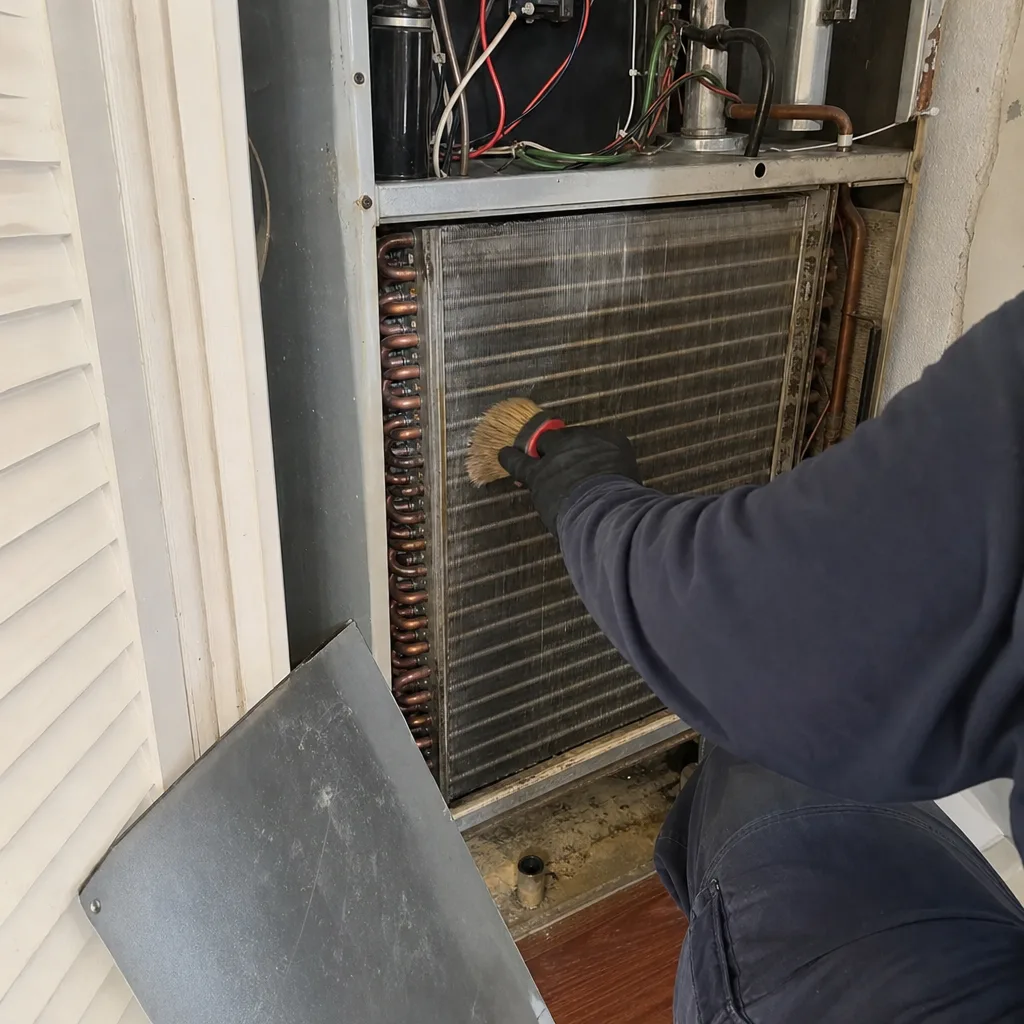
- The air handler cabinet and blower assembly. The component most basic cleanings miss. The blower wheel, motor housing, and coil surface collect dust that becomes a food source for mold when condensation forms. Any cleaning that stops before the cabinet leaves this zone holding contamination that will recirculate the moment the fan starts.
- Supply plenum and supply trunk. Where conditioned air leaves the air handler and gets distributed. Ducts here can show condensation issues in humid Crabtree summers, especially near the coil.
- Supply branch runs and registers. The final delivery points. Flex duct here sags and collects debris at low spots, and register boots can trap dust that never gets pulled back through the system.
In our experience, a full-system cleaning is only as good as its weakest zone. A crew that cleans zones 1, 2, and 5 but never touches the air handler cabinet leaves the most biologically active part of the system untouched. That’s why full-pathway scope matters more than equipment on its own.
Why Negative-Pressure Source Removal Matters
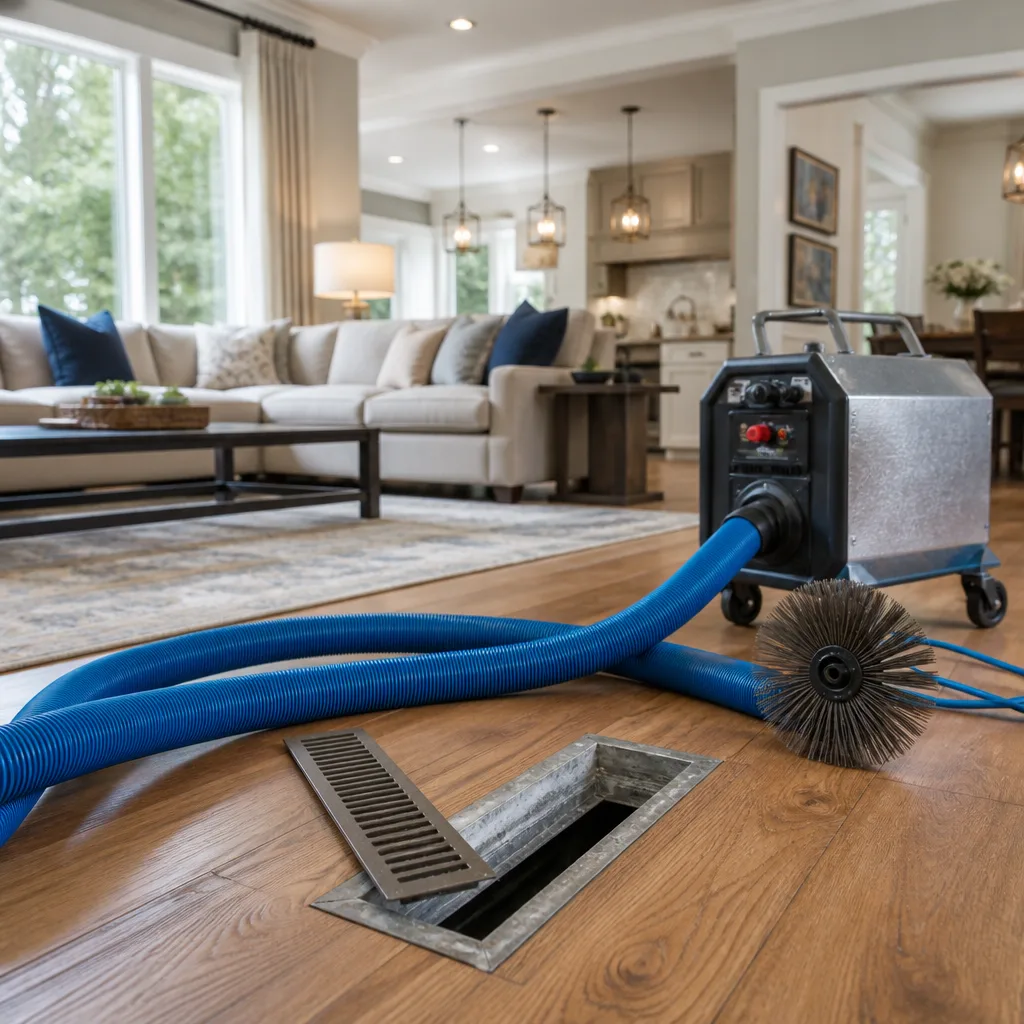
The single biggest quality divider in this trade is whether the cleaning uses negative-pressure source removal or just brush agitation with a shop-style vacuum. The difference sounds technical, but it’s simple. Negative-pressure source removal means the technician connects a HEPA-rated vacuum to the duct system and holds the whole pathway under continuous suction while agitating debris loose inside with rotary tools. Contamination is pulled toward the vacuum and captured, not scattered into the living space. Brush-and-vac operations agitate without that continuous enclosure, so a meaningful portion of the debris they dislodge ends up in the air the occupants breathe during the visit and after.
At Air Duct Cleaning Crabtree, we use Nikro HEPA-rated vacuum equipment that captures particles down to 0.3 microns, and we run Abatement Technologies air scrubbers on-site throughout the job. The scrubbers capture what we dislodge before it can recirculate into the home. That combination is why the process protects indoor air during service instead of just moving contamination around.
- True source removal: Continuous negative pressure holds debris inside the system until it’s captured at the vacuum.
- HEPA capture: Filters rated to trap sub-micron particles keep fine dust and spores out of the return air.
- On-site air scrubbing: Abatement Technologies units scrub the surrounding air while mechanical cleaning runs.
- Verification: Documented before-and-after photos of the ducts confirm the work got done.
If a quote is far below the rest, this is usually where the difference hides. Van-and-vacuum setups skip the HEPA enclosure and the on-site scrubbers. They may still knock dust off the duct walls, but they redistribute a portion of it into your home. Ask any contractor directly whether they use negative-pressure source removal with HEPA filtration and on-site air scrubbing. The answer tells you what the price is buying.
What You Should See Before, During, and After
Documentation is how a homeowner verifies that the work was actually done, rather than trusted that it was. Any reputable contractor should be able to show you physical evidence at three points in the process. If a crew can’t produce it, that’s your signal to look elsewhere.
Before the job: Ask for a walkthrough of the system, an explanation of what will be accessed (including the air handler cabinet), and a written scope listing each component to be cleaned. The walkthrough should include the thermostat settings and how the crew will isolate the system during cleaning.
During the job: The equipment should be visible. You should see the negative-pressure vacuum connected to the system, the HEPA filtration in place, and air scrubbing units running. Rotary brush equipment in use is a positive sign; a lone shop vacuum is not.
After the job: Request before-and-after photos of the duct interiors, the air handler cabinet, and the registers. Ask what was found (any mold, pest evidence, or debris buildup) and whether any duct repair or sealing is needed. A written summary of the service and any recommended follow-up should be provided.
- Written scope of components to be cleaned, including the air handler.
- Confirmation that negative-pressure HEPA equipment will be used.
- Before-and-after photos of ducts, cabinet, and registers.
- Notes on any contamination found (mold, debris, pest evidence).
- A duct integrity assessment with repair recommendations if gaps or disconnections are found.
The best contractors hand this over without being asked. If you have to chase it, that tells you something too.
How Duct Integrity Affects the Outcome
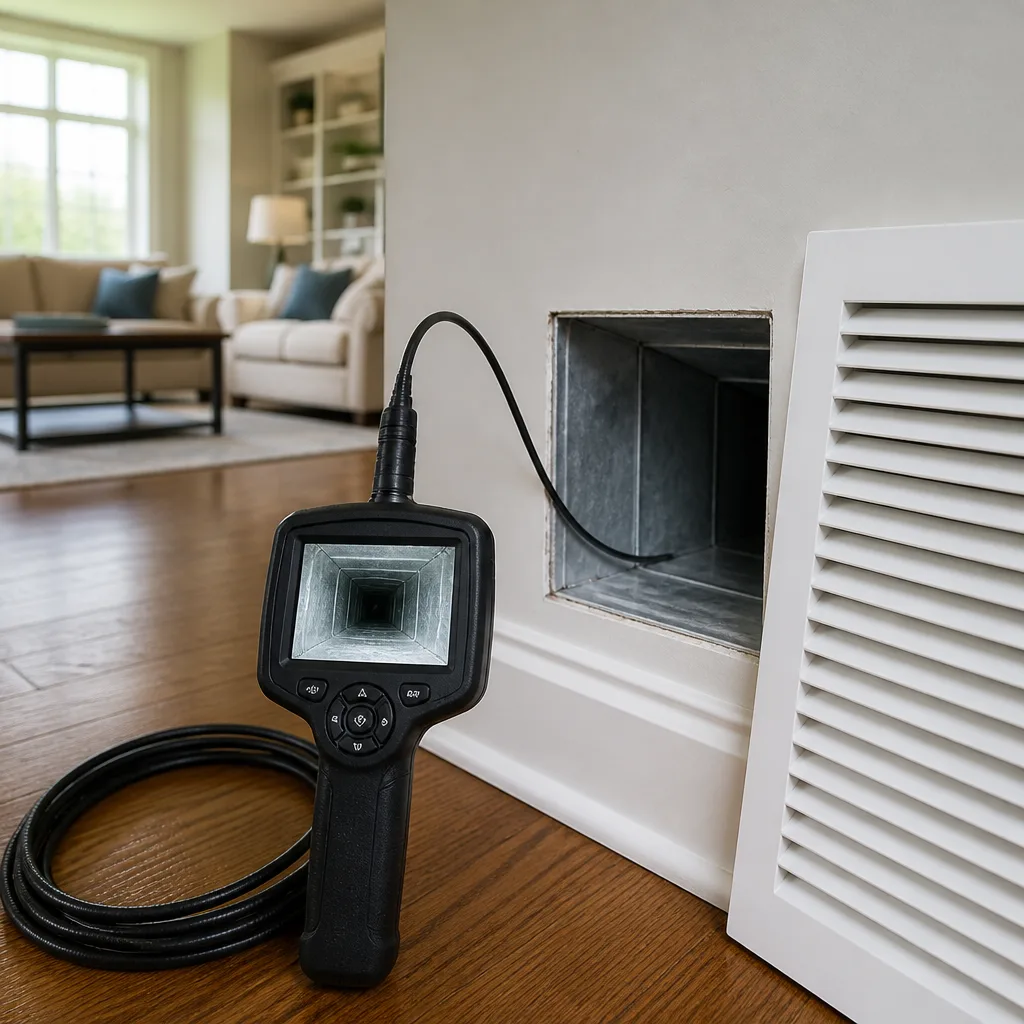
You can’t clean a system that isn’t sealed. That’s the piece most homeowners only learn after the fact. Duct integrity means the ductwork is continuous, connected, and free of gaps, and it must be assessed before cleaning rather than after. Gaps and disconnections let cleaning debris and conditioned air escape into wall cavities or crawl spaces, and they let outside contamination re-enter immediately after the job ends. Flex duct sag is a common culprit in Crabtree homes. When flex runs sag between supports, the low spots collect condensation and debris, and the sagged sections can also pull apart at the joints.
Duct sealing matters because it solves two problems at once. It stops the energy loss from conditioned air leaking into unconditioned space, and it stops the path for contamination re-entry once the system is clean. A cleaning without a sealing assessment is incomplete, because the system may be clean on the day of service and dirty again within weeks as gaps let in the very particulate that was just removed.
- Gaps at joints: Re-entry points for attic, crawl-space, and wall-cavity contamination.
- Disconnected flex runs: Blow conditioned air into cavities rather than rooms, wasting energy and pressurizing the wrong spaces.
- Sagging flex duct: Collects moisture and debris at low points, and stresses joints.
- Compromised boot connections at registers: Common points of air leakage hidden behind drywall or trim.
When our team assesses a Crabtree home, we look for integrity issues before mechanical cleaning begins. If repair or sealing is needed, we recommend it in the same visit so the system performs correctly afterward, not just looks clean on the day. If you want the full-system approach, the Air Duct Cleaning Crabtree page outlines how our service scope fits together.
Equipment That Separates Professional Work From Basic Vacuuming
Equipment names matter because they tell you what kind of work is actually possible. Consumer-grade vacuums sold as “professional” tools can’t hold a duct system under negative pressure through a full cleaning. The equipment that commercial restoration crews use does a fundamentally different job. Rotobrush rotary brush systems are the industry standard for mechanical duct cleaning because they agitate duct walls with a rotating brush on a flexible shaft while a separate HEPA vacuum pulls loosened debris out. Nikro HEPA-rated vacuums capture particles down to 0.3 microns, which matters when the contamination includes mold spores and fine clay dust. Abatement Technologies air scrubbers run on-site to protect indoor air during the service window.
Cleaning is only part of the job. We also repair and seal ducts so the system stays clean, and we can integrate air quality upgrades from Honeywell and Aprilaire into the same service window. That lets a homeowner address filtration and humidity control while the system is already open and accessible, rather than scheduling a separate visit later. From dryer vents to HVAC units, we service the full ventilation system, not just the visible registers.
- Assessment: Duct integrity check and written scope before any equipment is connected.
- Containment: Negative-pressure HEPA vacuum and Abatement Technologies scrubbers set up to hold contamination inside the system.
- Mechanical cleaning: Rotobrush rotary brush systems agitate duct walls through the full pathway, including the air handler cabinet.
- Sanitizing: Duct surfaces treated after cleaning to address remaining microbial growth.
- Sealing and repair: Gaps and disconnections sealed, sagging runs addressed.
- Verification: Before-and-after documentation handed to the homeowner.
The Full Ventilation System: Ducts, Dryer Vents, and HVAC
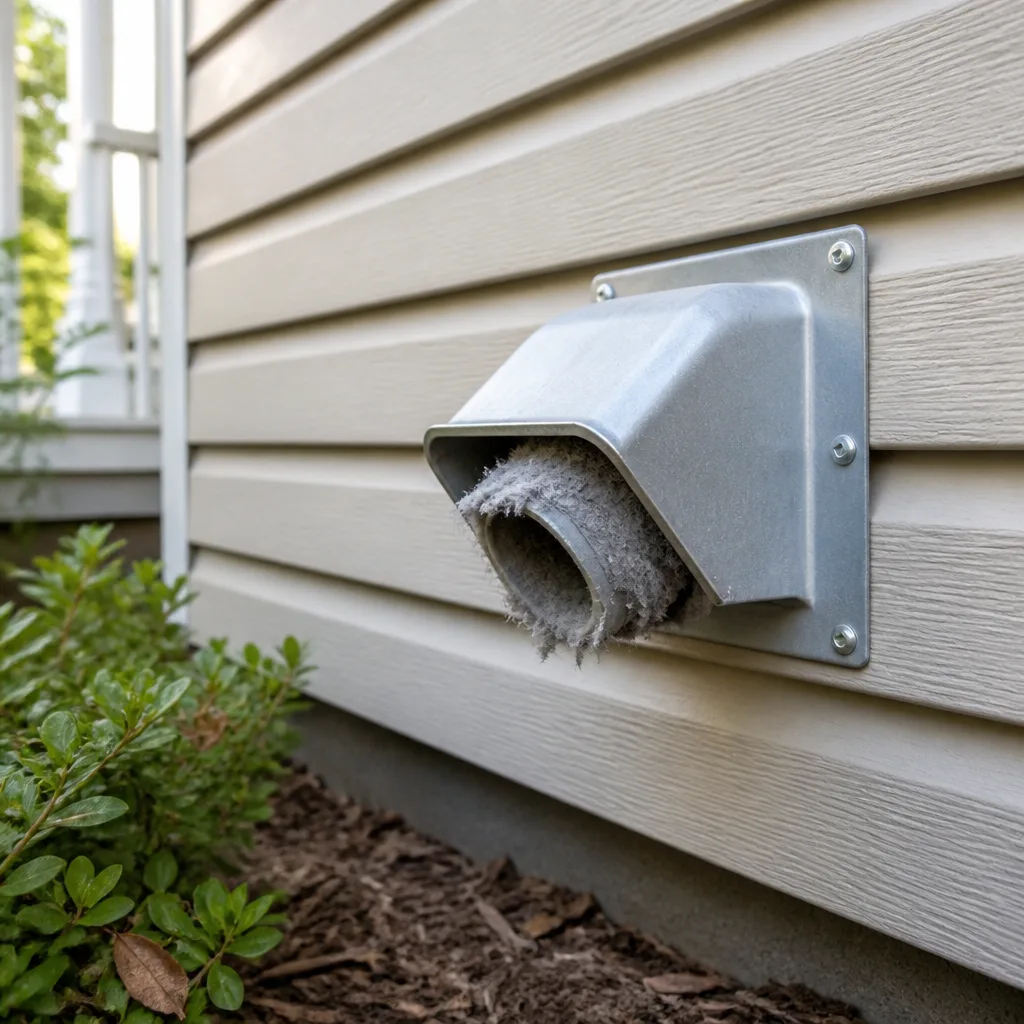
A home’s ventilation system extends beyond the air ducts. Two other components deserve attention in the same conversation. The first is the HVAC unit itself: the evaporator coil, blower housing, and drain pan all collect dust and moisture, and cleaning them is part of how the system stays healthy. Our HVAC cleaning service covers those components separately from the duct runs. The second is the clothes dryer vent, which is a fire-safety component, not a convenience. Lint accumulates in the vent run over time, and restricted airflow drives up dryer temperatures. Dryer vent cleaning is a named service for us because it’s part of whole-home ventilation safety, not an upsell tacked onto a duct job. You can learn more about that service on our dryer vent cleaning page.
Air quality upgrades fit naturally here too. Guardsman products, along with Honeywell and Aprilaire lines, allow filtration and humidity control improvements to be built into the same service window. In a Crabtree home where humidity is the underlying driver of duct contamination, better humidity control can reduce how often the ducts need deep cleaning in the first place.
- Air ducts: Full-pathway cleaning from return intake through supply registers, including the air handler cabinet.
- HVAC unit: Coil, blower, and drain pan cleaning to remove the contamination source at the system core.
- Dryer vent: Dedicated cleaning that addresses lint accumulation and airflow restriction.
- Sanitizing: Duct surface treatment after cleaning to address remaining microbial growth.
- Duct repair and sealing: Integrity fixes that prevent energy loss and contamination re-entry.
How Often Does It Really Need Doing?
Air duct cleaning typically needs to happen every three to five years, but Crabtree’s humid summers and the frequent heavy cooling-season runtime often push that window shorter. The right interval depends on more than a calendar. A few signals suggest it’s time regardless of the clock: visible dust blowing out of registers when the system starts, musty odors that persist after cleaning the filters, uneven airflow between rooms, or allergy symptoms that worsen indoors. If any of those apply, call for an assessment before deciding on the interval.
Homes with pets, smokers, or recent renovation work tend to need cleaning sooner than a light-use home. So do properties where the HVAC filter grade is low or infrequently changed. For property managers overseeing multiple units, a fixed inspection schedule beats a reactive one, since a system that’s clean and sealed performs predictably across units. And when the ducts have never been cleaned or when it’s been many years, the first inspection should include a duct integrity assessment, since decades of settling and joint stress tend to surface gaps and disconnections. For a nearby city’s perspective on the same service, see our guide to air duct cleaning in Raleigh.
Common Mistakes to Avoid
- Booking a per-vent coupon price. A low headline price often excludes the air handler cabinet and HEPA filtration. Ask what the written estimate covers, component by component, before you agree.
- Skipping the air handler cabinet. Cleaning every visible duct run but leaving the blower and coil housing untouched re-contaminates the system within days of any humid spell.
- Cleaning before assessing duct integrity. Gaps and disconnected flex runs let contamination re-enter immediately. Assess and seal first, clean second.
- Accepting brush-and-vacuum work without negative pressure. Debris that isn’t captured at a HEPA vacuum ends up in the living space instead. Ask about the equipment and the containment setup.
- Overlooking the dryer vent. A restricted vent run is a fire-safety concern and a separate cleaning item. Whole-home ventilation oversight is a common mistake in older Crabtree homes.
- Not asking for before-and-after photos. Documentation is the only way to verify the work was done. If a crew can’t produce it, that’s a signal.
- Ignoring humidity at the source. Cleaning ducts without addressing the moisture that drives contamination in Crabtree’s climate means the problem returns. Filtration and humidity upgrades from Honeywell and Aprilaire lines can be part of the fix.
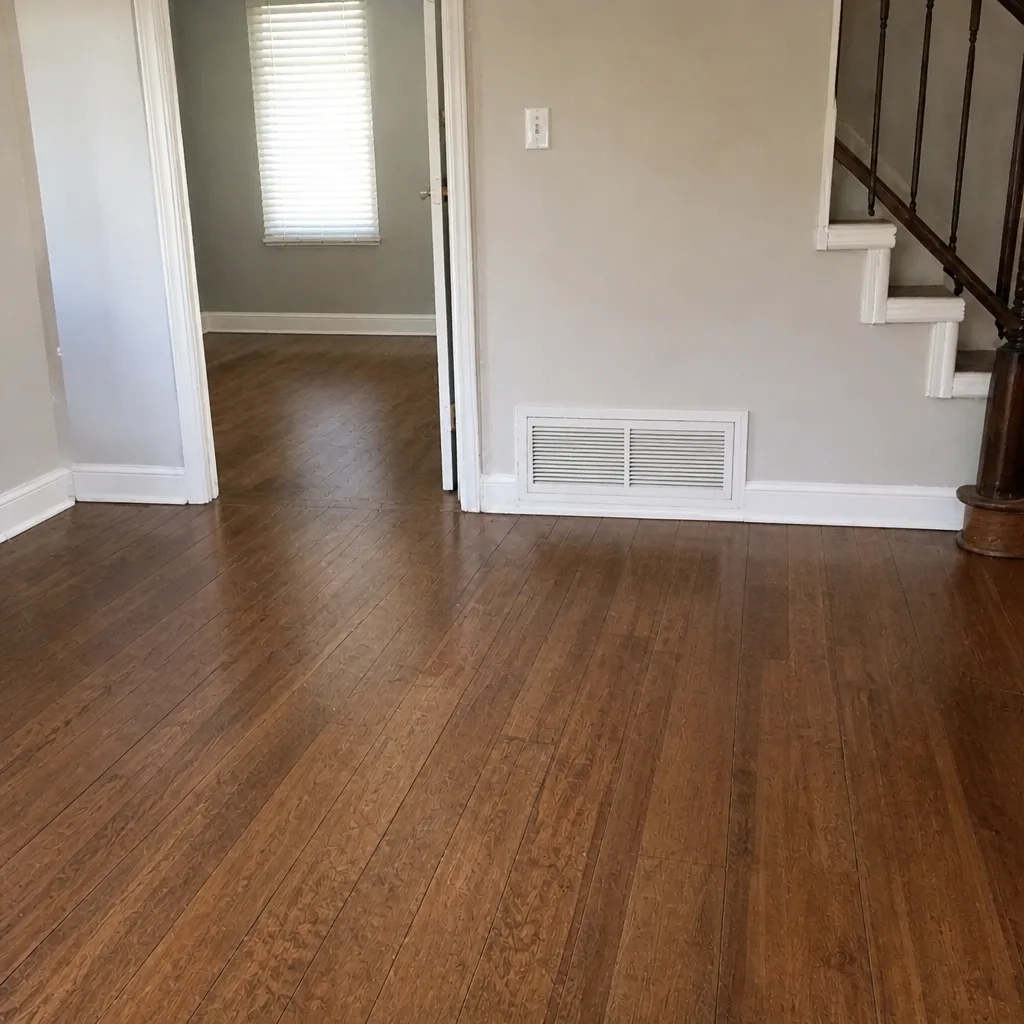
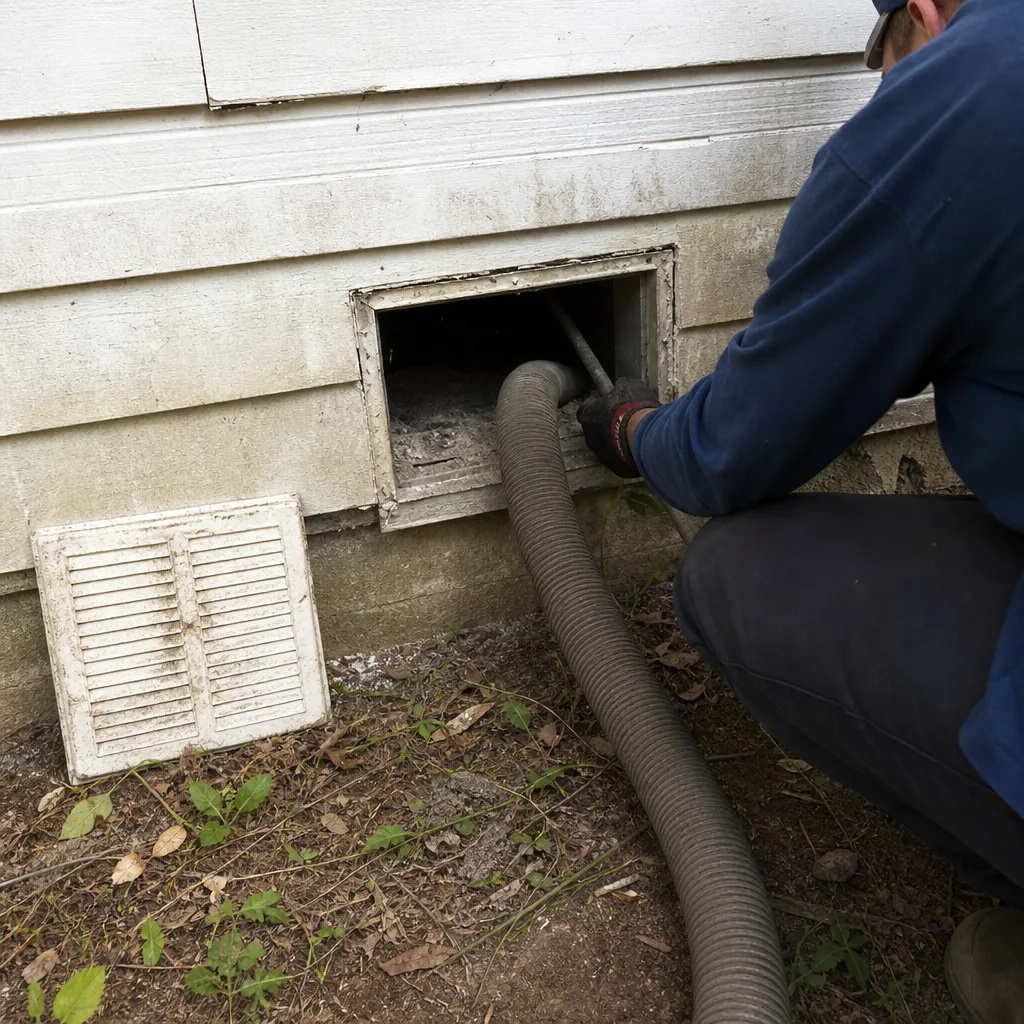
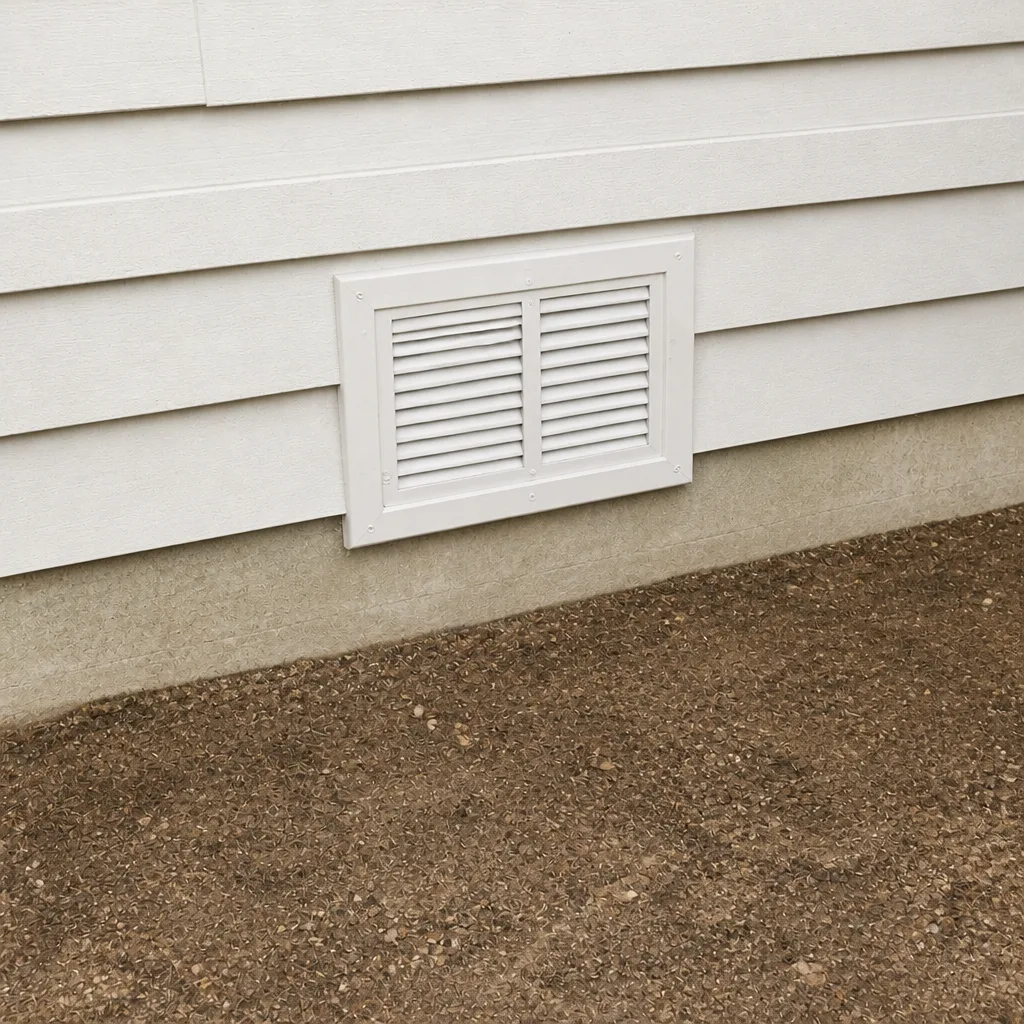
See the difference
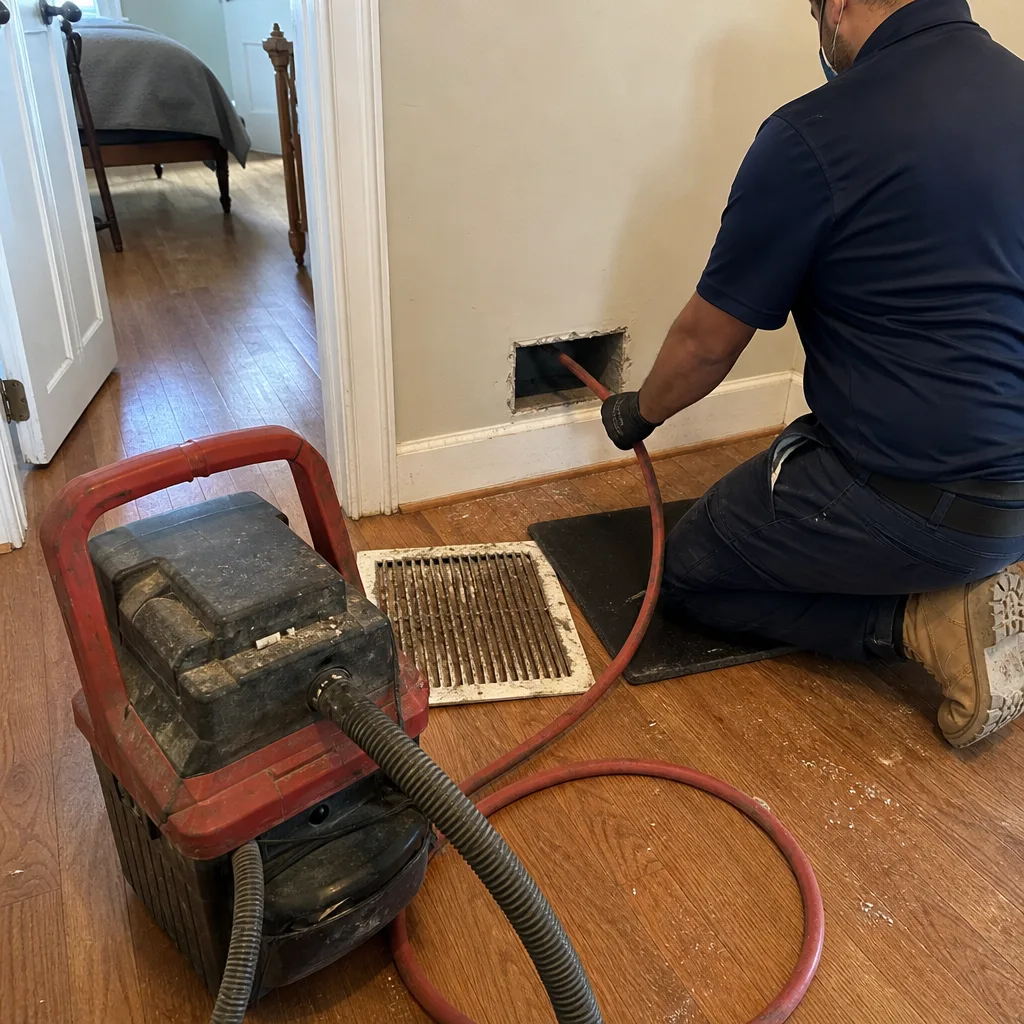 Before
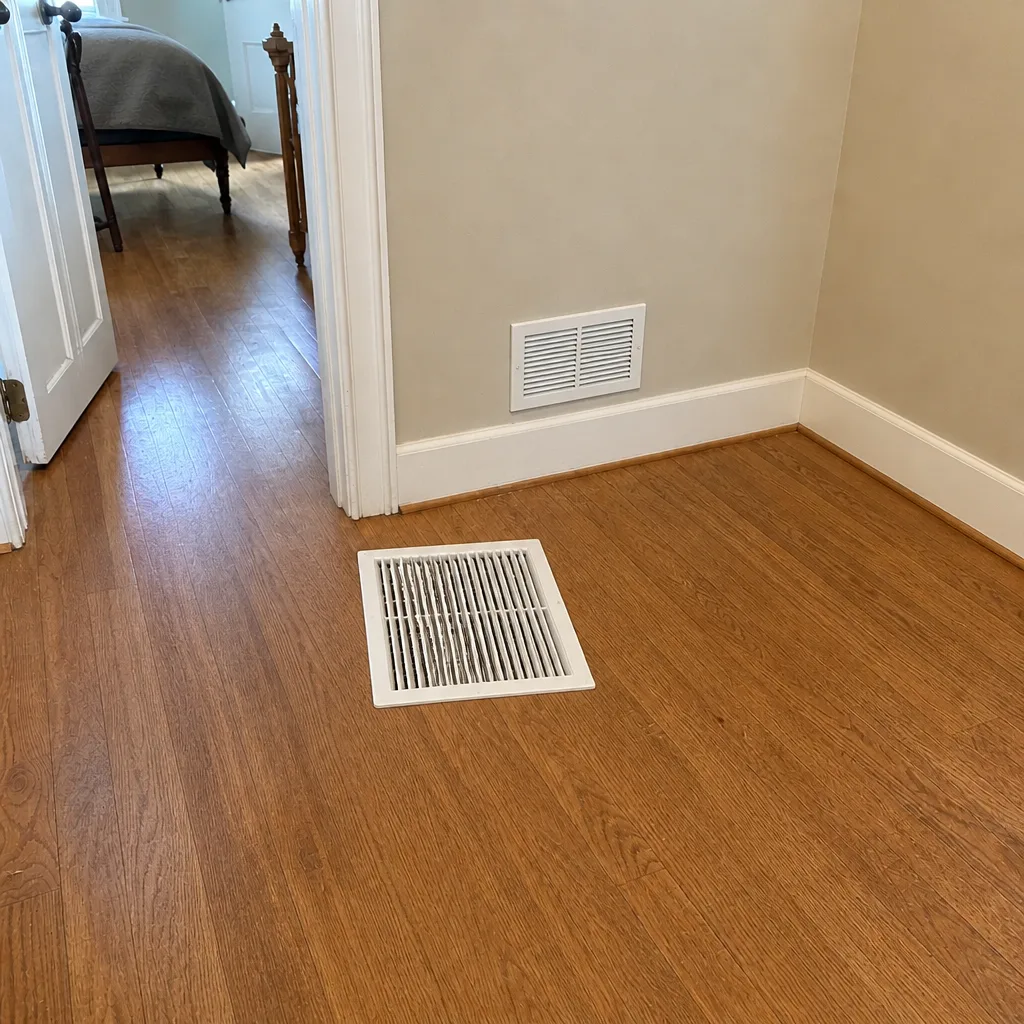 After
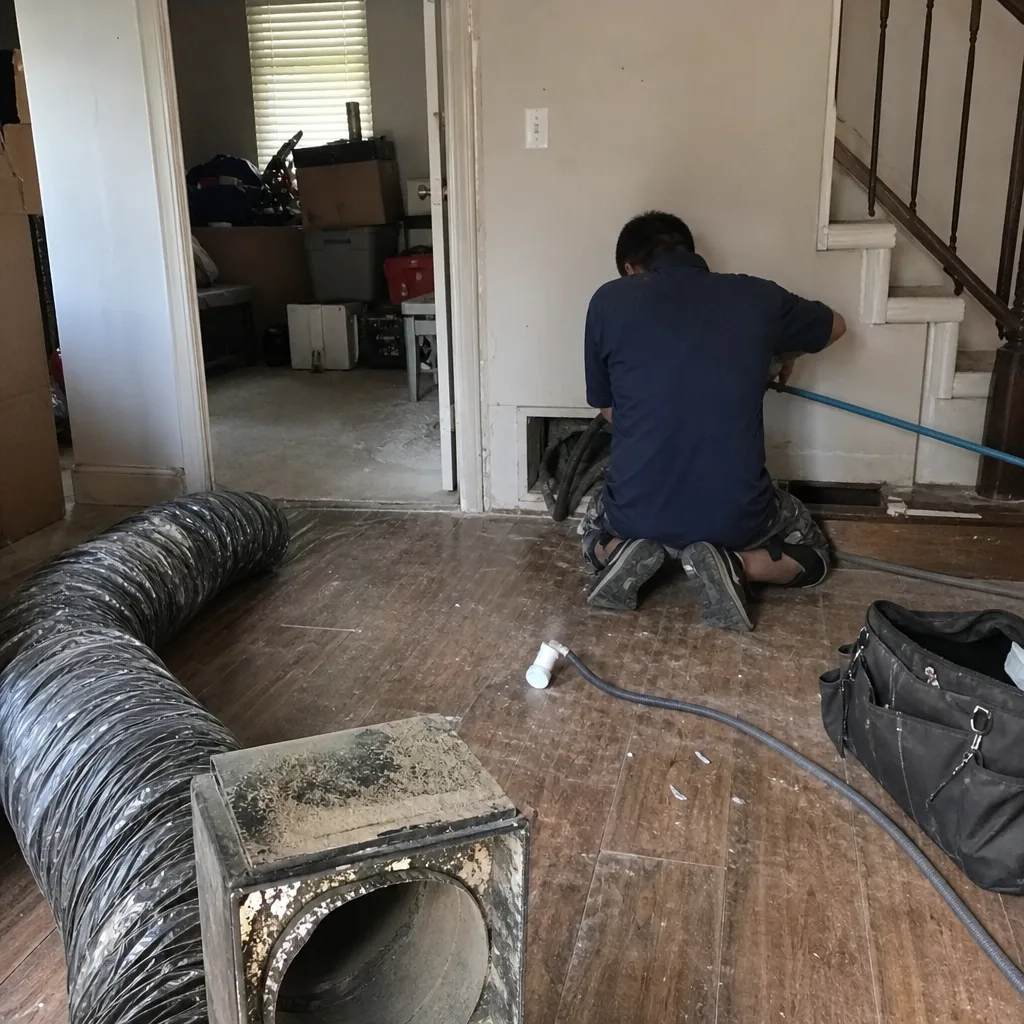 Before
 After
 Before
 After
When to Call a Professional
Call a professional when you can see or smell the problem, or when symptoms suggest it even without visible evidence. Specific triggers: dust blowing from registers when the system starts, musty odors that persist after filter changes, uneven airflow between rooms, allergy or asthma symptoms that worsen indoors, visible mold near registers or on coil surfaces, recent renovation or water damage that disturbed particulate, or a dryer that takes longer than it used to. Any of these justify a full-pathway assessment. The earlier you catch a duct integrity issue, the cheaper the repair tends to be. Our technicians have up to 11 years of experience diagnosing exactly these situations, and Air Duct Cleaning Crabtree offers free estimates in Crabtree. Call (833) 509-5534 for an assessment, and ask about duct repair and sealing if you suspect gaps or disconnected runs.
Frequently Asked Questions
Cost in Crabtree depends on the size of the system, how many duct runs the home has, and whether the air handler cabinet and dryer vent are included in the scope. The final price is set per job by a written estimate before work starts, and the estimate covers whole-system cleaning rather than a per-vent fee. Call (833) 509-5534 for an exact quote. Estimates are free.
Lower quotes usually exclude the air handler cabinet, skip HEPA negative-pressure containment, and don’t include on-site air scrubbing. Those steps are the most labor-intensive part of the job, so a price that leaves them out isn’t covering the same scope. Ask any contractor which components the price includes. Call (833) 509-5534 for a written estimate that lists the full scope.
You know the work was done when you get before-and-after photos of the duct interiors, the air handler cabinet, and the registers, plus a written summary of what was found. A crew that uses visible equipment, negative-pressure HEPA vacuuming, and on-site air scrubbing is one you can verify in real time, and you should ask for the documentation before signing off. Call (833) 509-5534 for a full-system estimate.
Every three to five years is the typical interval, though Crabtree’s humid climate and long cooling season often shorten that. Homes with pets, smokers, or recent renovation tend to need it sooner. If you notice musty odors, uneven airflow, or worsening indoor allergy symptoms, get an assessment rather than waiting out the calendar. Call (833) 509-5534 for a free estimate.
Duct cleaning can help when the duct system itself is holding the contamination causing symptoms, which is common in Crabtree’s humid climate where mold and dust accumulate inside ductwork. The improvement depends on whether cleaning is paired with duct integrity repairs, sealing, and better filtration; a clean but leaky system won’t stay clean. Call (833) 509-5534 to schedule an assessment.
Yes. We service the full ventilation system, including HVAC unit cleaning, dryer vent cleaning, sanitizing, and duct repair and sealing. Cleaning the coil, blower, and drain pan addresses contamination at the system core, while dryer vent cleaning addresses lint accumulation in the vent run. Ask about Honeywell and Aprilaire upgrades to add filtration and humidity control in the same service window. Call (833) 509-5534 for a free estimate.
The Bottom Line
A duct cleaning is only as good as what it covers. The system is a pathway with five zones, and the one most often missed, the air handler cabinet, is the most important. Negative-pressure source removal with HEPA filtration separates real full-system work from brush-and-vacuum shortcuts. Duct integrity has to come first, since a clean system with gaps and sagging flex runs won’t stay clean in Crabtree’s humid climate. Coverage of the whole ventilation system, from ducts to HVAC unit to dryer vent, is what makes a service thorough. Ask for the before-and-after documentation that proves the job was done. Call (833) 509-5534 for a free estimate. We answer 24/7. Fast dispatch from 7am to 7pm, Sunday through Friday.
Written by the team at Air Duct Cleaning Crabtree.